


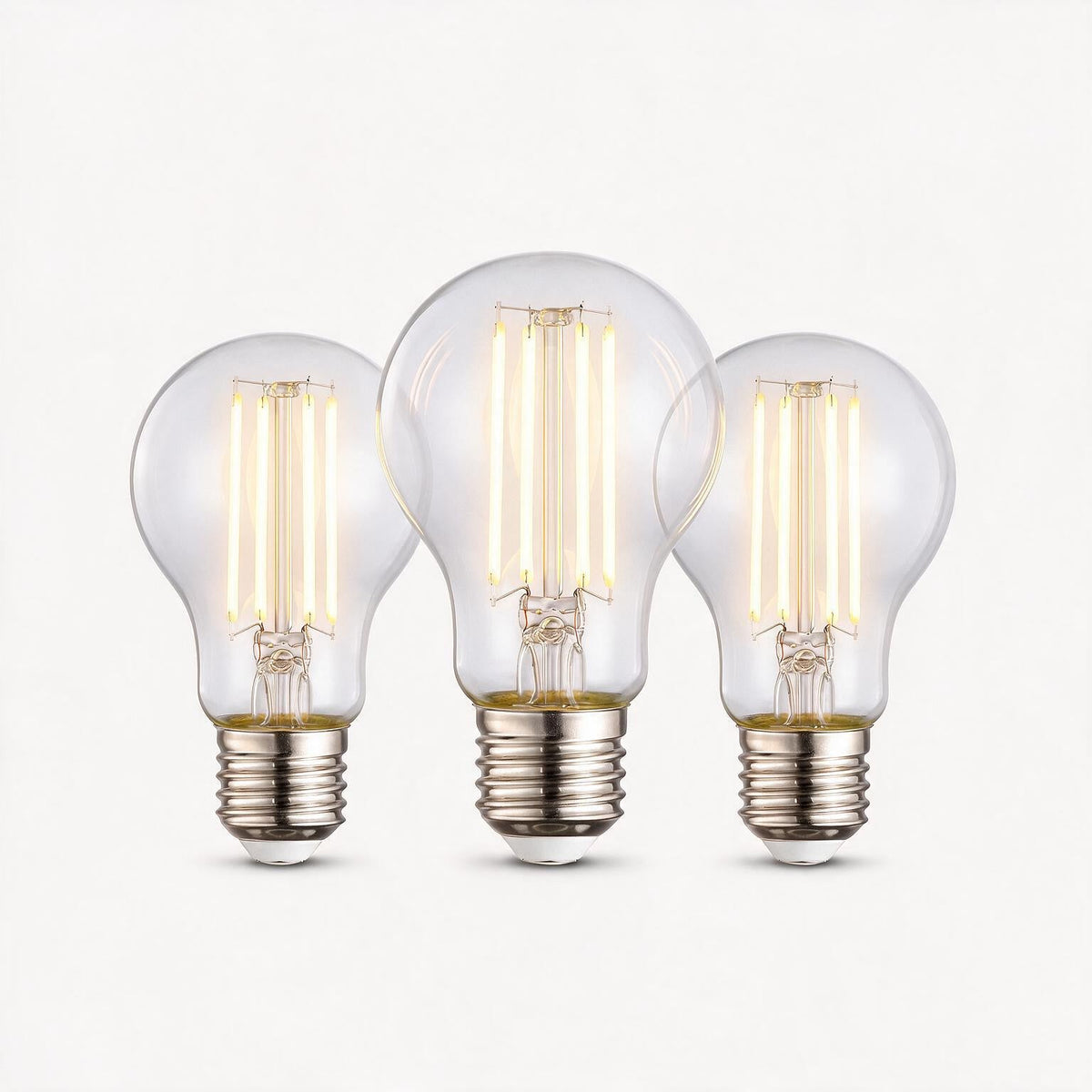


Light Bulbs Overview
Our wide range: E14, E27, GU10, and LED tubes
Discover light bulbs for different lamps and lighting needs. At EGLO, you’ll find modern LED light bulbs with a variety of bases, shapes, brightness levels and light colours – from E27 and E14 to GU10 and LED tubes. This makes it easy to equip an existing lamp with a suitable bulb and tailor the lighting effect to the room. If you’re looking to buy light bulbs, the base and dimensions are the first things to consider. You can then narrow down your choice by brightness, light colour, shape and features such as dimmability.
Discover light bulbs for different lamps
Whether for a pendant, ceiling, table, floor or wall lamp, the bulb you choose affects the brightness, light distribution and overall appearance of the lamp. With open lampshades in particular, the shape of the bulb also becomes a visible design element. The EGLO range includes a variety of LED light bulbs – from compact versions for smaller lamps and classic bulb and candle shapes to decorative filament bulbs and directional spotlights. If you’re looking for traditional incandescent light bulbs, you’ll also find numerous LED alternatives in familiar shapes. When choosing a bulb, make sure that the base, dimensions and technical specifications are compatible with your existing lamp. You can then refine your selection according to the desired lighting effect and features.
LED light bulbs as a modern light source
LED light bulbs are available in many shapes and designs to suit different lighting needs – from functional general lighting to decorative lighting accents. Many models are based on the familiar shapes of traditional incandescent bulbs but use modern LED technology. They are therefore also commonly referred to simply as LED bulbs. When replacing a traditional incandescent bulb, the lumen value is particularly important, as it indicates the bulb’s brightness. With LED light bulbs, wattage primarily indicates power consumption. To find a suitable option, you should also make sure that the base, dimensions and light colour match your existing lamp and intended use. Lifespan also varies depending on the model. According to the available product information, EGLO LED light bulbs achieve a lifespan of approximately 15,000 to 25,000 hours, depending on the version. Selected energy efficiency class A bulbs can even reach up to 50,000 hours, according to the data sheet.
Choose the right light bulb by base
The base is a quick way to narrow down your options. First, check the marking on your lamp or existing bulb. You can then choose the appropriate base type and refine your selection by brightness, light colour, size and shape. The EGLO range includes bulbs for E27, E14 and GU10 fittings as well as T8 LED tubes with a G13 base. The right option depends on your existing lamp.
E27, E14 and GU10 light bulbs
E27 light bulbs have a screw base with a diameter of 27 mm, while E14 light bulbs have a smaller 14 mm screw base. GU10 light bulbs use two contact pins with a twist-lock fitting and are commonly used in spotlights. In the EGLO categories, you’ll find E27, E14 and GU10 light bulbs in a variety of shapes, brightness levels and designs.
LED tubes for suitable light fittings
For suitable tube light fittings, EGLO offers T8 LED tubes with a G13 base in the common nominal lengths of 60, 120 and 150 cm. When replacing a fluorescent tube, check not only its length and base but also the technology used in the existing light fitting. The EGLO LED tubes described here are designed for light fittings with an electromagnetic ballast; the appropriate LED starter is included. These models are not suitable for light fittings with an electronic ballast.
Choose light bulbs by lighting effect and function
Once you know the required base and dimensions, you can choose your light bulb according to the desired lighting effect. The most important factors are brightness in lumens, colour temperature in Kelvin and, depending on how you plan to use the light, dimmability. For general lighting, approximately 100–150 lm/m² is often used as a guideline for living rooms and bedrooms. In kitchens, bathrooms and offices, approximately 250–300 lm/m² can provide a useful guideline. The actual amount of light required depends on factors including room size, ceiling height, wall colours, furnishings and additional light sources.
For light colour, you can use three ranges as a guide:
Warm white: 2,700–3,300 K – often chosen for living rooms, bedrooms, children’s rooms and dining rooms.
Neutral white: 3,300–5,300 K – often chosen for kitchens, bathrooms and home offices.
Daylight white: over 5,300 K – can be suitable for areas requiring high levels of light, such as workshops or garages.
Which light colour feels most comfortable also depends on how the room is used and your personal preferences. Dimmable light bulbs offer greater flexibility if you want the same lamp to provide both functional and more subdued lighting.
Shapes and types of light bulbs
Alongside technical specifications, the shape of a bulb also affects how it looks in a lamp. Depending on the base, the EGLO range includes classic bulb, candle, drop, globe, reflector and tube shapes, as well as decorative filament designs. For enclosed lamps, length and diameter are particularly important. In open pendant, table or wall lamps, however, the bulb can remain visible, allowing clear or decorative filament versions to become part of the overall look.
If you want to replace a traditional incandescent light bulb, shape and base are therefore not the only considerations. The dimensions, lumen value and light colour should also suit the lamp and your desired lighting effect.
Buying light bulbs: what should you consider?
When buying a new light bulb, start by checking the required base and available dimensions. You can then narrow down your options according to brightness, light colour and the features you need. The following points are particularly important:
Base: E27, E14, GU10 or another base type must be compatible with your existing lamp.
Dimensions: Length and diameter are especially important for small or enclosed lampshades.
Brightness: Use the lumen value as a guide and consider the number of light sources in the room.
Light colour: Warm white, neutral white and daylight white create different lighting effects.
Features: If you want to adjust the brightness, choose a model specifically marked as dimmable or controllable.
Using these criteria will help you find a suitable option in the light bulb shop more quickly – one that works technically with your lamp and creates the lighting effect you want. How bright should a light bulb be?
For living rooms and bedrooms, approximately 100–150 lm/m² can serve as a guideline for general lighting, while approximately 250–300 lm/m² is often used for kitchens, bathrooms and offices. The actual requirement depends on ceiling height, room use, wall colours, furnishings and additional light sources. Surfaces also affect perceived brightness. Light-coloured walls reflect more light than dark surfaces, so a higher light output may be useful in rooms with darker interiors.
H3
Can I replace old incandescent bulbs with LED light bulbs?
Suitable LED light bulbs with comparable bases and shapes are now available for many traditional incandescent light bulbs. When replacing a bulb, also check its dimensions, lumen value and light colour. If your lamp has a dimming function, compatibility between the LED light bulb and dimmer is also important. If you’re looking to buy an incandescent light bulb or replace an existing one, you can therefore often find an LED alternative in a familiar shape. The technical specifications of both the bulb and the existing lamp remain the key factors when making your choice.
H3
How should old light bulbs be disposed of?
LED light bulbs should not be disposed of with household waste. They are collected separately and can, for example, be taken to designated municipal collection points or suitable take-back points. For other types of old light bulbs, the correct disposal method depends on the type of bulb. Always follow local collection and disposal regulations.
FAQs
What base does my lamp need?
Your lamp fitting determines which base the light bulb requires. E27, for example, has a 27 mm screw base, while E14 has a 14 mm screw base. GU10, on the other hand, uses two contact pins with a twist-lock fitting. Before buying a bulb, check the marking on your lamp or existing bulb.
Which light colour is suitable for which room?
Warm white at 2,700–3,300 K is often chosen for living rooms, bedrooms, children’s rooms and dining rooms when a cosy lighting effect is desired. Neutral white at 3,300–5,300 K can be a useful choice for clear lighting in kitchens, bathrooms and home offices. Daylight white above 5,300 K can be considered for workshops or garages where a particularly clear lighting effect is desired.
When is a dimmable light bulb useful?
A dimmable light bulb is useful when you want the same lamp to create different lighting moods – for example, brighter light for reading or working and reduced brightness in the evening. Not every LED light bulb is dimmable, so check the product information. With conventional dimmers, the LED light bulb and dimmer must also be compatible
Which bulb shape suits my lamp?
The right shape depends on both the available space and the look you want to create. For enclosed or narrow lamps, check the length and diameter carefully. With open lamps, classic bulb, candle and drop shapes or decorative globe and filament designs can intentionally remain visible.
How bright should a light bulb be?
For living rooms and bedrooms, approximately 100–150 lm/m² can serve as a guideline for general lighting, while approximately 250–300 lm/m² is often used for kitchens, bathrooms and offices. The actual requirement depends on ceiling height, room use, wall colours, furnishings and additional light sources. Surfaces also affect perceived brightness. Light-coloured walls reflect more light than dark surfaces, so a higher light output may be useful in rooms with darker interiors.
Can I replace old incandescent bulbs with LED light bulbs?
Suitable LED light bulbs with comparable bases and shapes are now available for many traditional incandescent light bulbs. When replacing a bulb, also check its dimensions, lumen value and light colour. If your lamp has a dimming function, compatibility between the LED light bulb and dimmer is also important. If you’re looking to buy an incandescent light bulb or replace an existing one, you can therefore often find an LED alternative in a familiar shape. The technical specifications of both the bulb and the existing lamp remain the key factors when making your choice.
How should old light bulbs be disposed of?
LED light bulbs should not be disposed of with household waste. They are collected separately and can, for example, be taken to designated municipal collection points or suitable take-back points. For other types of old light bulbs, the correct disposal method depends on the type of bulb. Always follow local collection and disposal regulations.