






Spotlights Overview
Create targeted lighting and distinct lighting zones
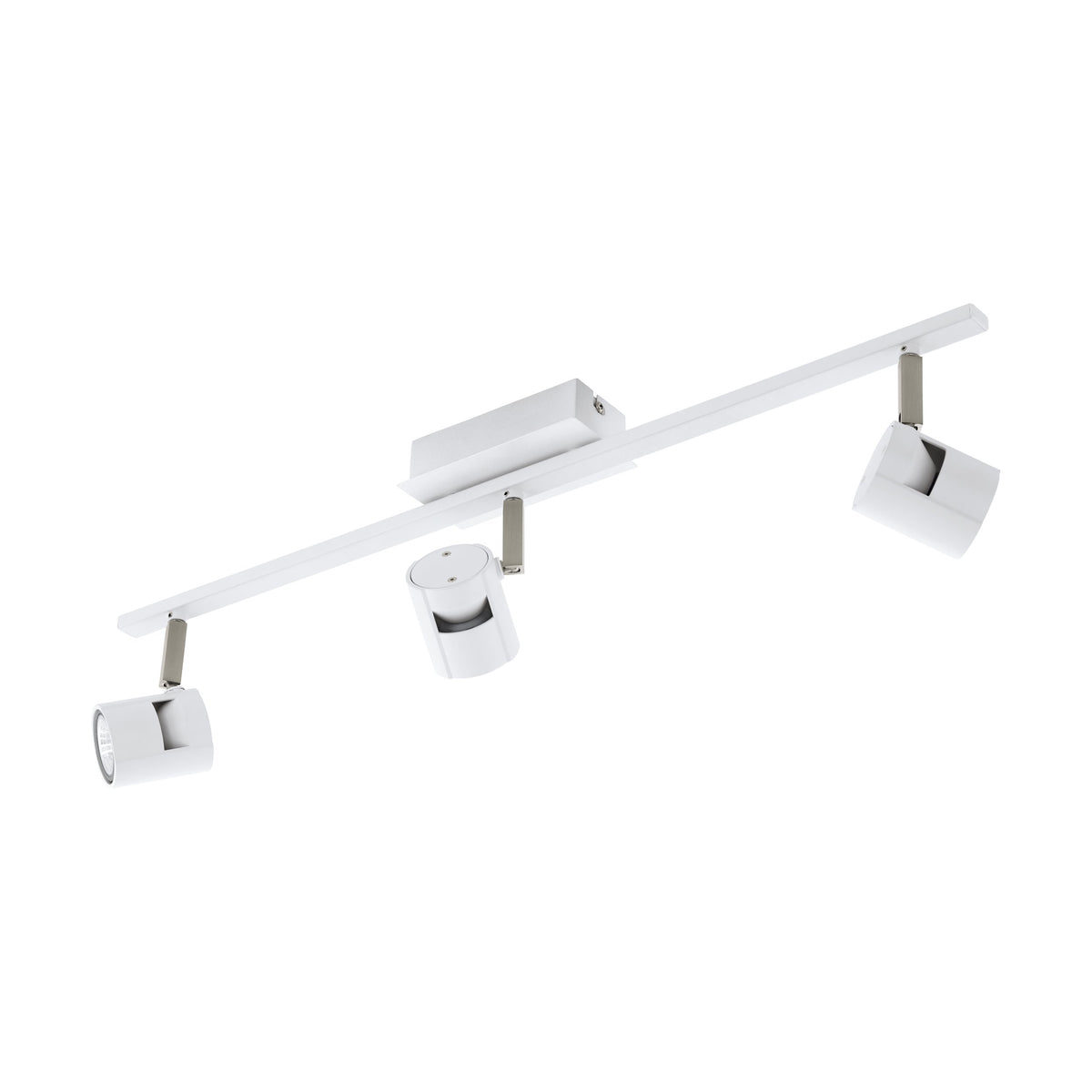
Ceiling spotlights direct light exactly where you need it. At EGLO, you’ll find single ceiling spots, multi-light ceiling spotlights and adjustable LED spotlight bars for living rooms, kitchens, hallways, bedrooms and home offices. Whether you choose a compact ceiling spot or a multi-light ceiling spotlight, consider the number of spots, how they can be positioned, the light output and your preferred light colour. Adjustable spotlights are particularly practical when you want to illuminate different areas of a room.
LED Spots and Ceiling Spotlights for Flexible Room Lighting
Depending on their number, light output and beam angle, LED spots and ceiling spotlights can be used for general lighting or targeted lighting accents. With rotating and adjustable models, you can direct the light towards a dining table, kitchen worktop, wardrobe or reading corner. A single ceiling spot is a space-saving solution for smaller areas. For larger rooms or several functional zones, ceiling lights with multiple spots are a good choice. The individual spotlights can be turned in different directions, distributing the light more widely throughout the room. LED ceiling spotlights feature a permanently integrated LED module. If you want to replace or choose the light source yourself later, look for a ceiling spotlight with a suitable lamp holder for LED bulbs. Luminous flux, light colour and dimming functions may vary depending on the model and are specified in the product details. For general lighting, around 100–150 lumens per square metre is often used as a guideline in living and sleeping areas. In kitchens, bathrooms and home offices, reference values for general lighting are often around 250–300 lumens per square metre. The actual requirement depends on factors such as room size, ceiling height, wall colours, furnishings and additional zone or accent lighting.
Light colour also influences the atmosphere of a room:
Warm white at 2,700–3,300 K is often chosen for living rooms, bedrooms, children’s rooms and dining rooms.
Neutral white at 3,300–5,300 K is often suitable for kitchens, bathrooms and home offices.
Daylight white above 5,300 K has a cool, functional appearance. This light colour is used, for example, in workshops or garages.
These values are intended as a guide. Depending on the atmosphere you want to create and how the room is used, a different light colour may also be suitable.
Surface-Mounted Spots for Ceilings, Hallways and Kitchens
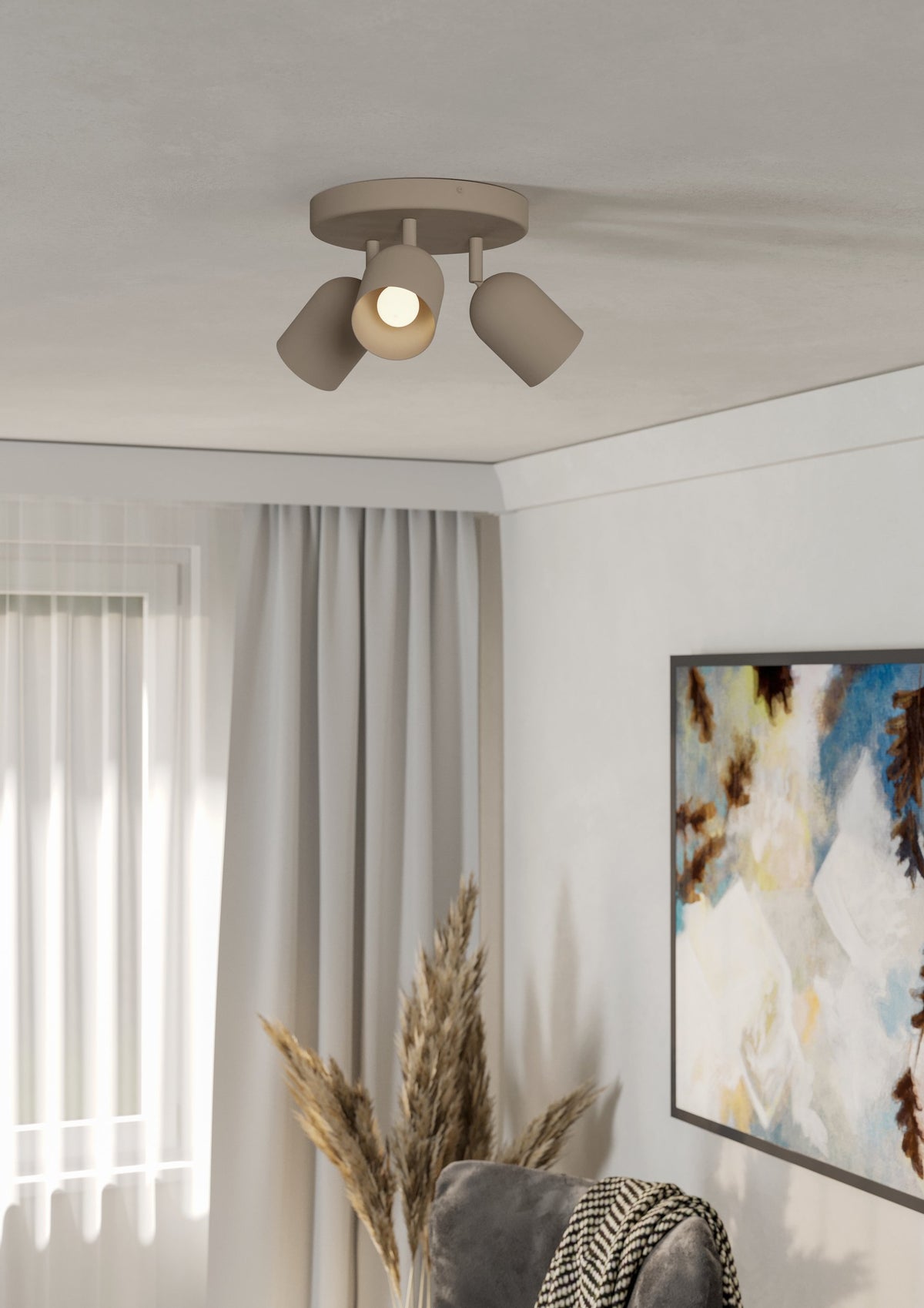
Surface-mounted spots are attached directly to the ceiling and do not require a recessed opening. This makes them a practical solution if you want to use an existing power outlet or if the ceiling is not suitable for recessed spots. Surface-mounted ceiling spots are available as single spotlights as well as two-, three- or multi-light versions. A single spot on the ceiling mainly illuminates a limited area, while multi-light models can cover several zones within a room. In hallways, adjustable spotlights can be positioned to illuminate the walkway evenly. In the kitchen, the light can be directed towards work surfaces, cabinets or the dining area. To reduce shadows on the worktop, the light should ideally fall from the front or side, depending on the room layout.
Using Spotlight Bars and Adjustable Spotlights Effectively
An LED spotlight bar combines several spotlights on an elongated or compact ceiling element. It is particularly suitable for rooms where several areas need to be illuminated from one central power connection. In open-plan kitchen and living areas, for example, the individual spots can be directed towards the worktop, dining table and living area. In the living room, the sofa, shelving and picture wall can be illuminated separately. In long hallways, a longer spotlight bar distributes light across a larger area. When choosing a model, check how far the individual spotlights can rotate and tilt. The length of the spotlight bar, the number of spots and the position of the ceiling outlet should also suit the shape of the room. With low ceilings, flat models usually blend into the room more discreetly than lights that extend further downwards. Adjustable ceiling spotlights are also useful when the way a room is used changes. If furniture is moved or a workspace is rearranged, suitable models allow you to adjust the direction of the light accordingly.
Choosing the Right Spots & Spotlights for Your Room
Choose spots and spotlights based on the size of the room, how it is used and the desired light distribution. A single ceiling spot may be enough for small zones or targeted accents. In larger rooms, multi-light ceiling lights with spots distribute the light more widely. The room design also affects how much light you need. Light-coloured walls, ceilings and furniture reflect more light, while dark or matt surfaces absorb more of it. In rooms with dark interiors or high ceilings, a higher light output or an additional light may therefore be useful.
Ceiling Spotlights for Living Spaces
In the living room, adjustable ceiling spotlights can serve several purposes. Direct individual spotlights towards the coffee table, a reading corner or a picture wall, for example. Warm white light at 2,700–3,300 K is often chosen for comfortable general lighting. Compact LED ceiling spotlights are also a flexible solution for the bedroom. Multiple spots can illuminate the wardrobe, dressing area and open areas of the room. Dimmable models allow you to adjust the brightness according to the time of day and how the room is being used. Whether a light is compatible with a dimmer, and which type, can be found in the relevant product information. In the dining room, spots can complement the general lighting or highlight the table area. For an even lighting effect, position the spotlights so that the table is well illuminated without shining directly into the eyes of people seated at it.
Spots for Kitchens and Work Areas
In kitchens, offices and other work areas, clear and even lighting is important. Multiple ceiling spots can illuminate work surfaces more precisely than a single central light source. For kitchens and home offices, around 250–300 lumens per square metre is often used as a guideline. Neutral white at 3,300–5,300 K often creates a clear, functional lighting effect. If you prefer a more comfortable atmosphere, warm white can also be suitable depending on how the space is used. Dark worktops, high ceilings or indirectly positioned spotlights can increase the amount of light you need. Additional under-cabinet lights or table lamps are useful when individual work surfaces need more targeted illumination.
FAQs
How many ceiling spotlights do I need for a room?
The number you need depends on the size of the room, the luminous flux of the individual spots and how they are positioned. Around 100–150 lm/m² is often used as a guideline for living and sleeping areas, while around 250–300 lm/m² is common for kitchens, bathrooms and offices. Dark walls, high ceilings or indirect lighting can increase the amount of light required.
Which light colour is suitable for LED spots?
Warm white at 2,700–3,300 K is often chosen for living rooms, bedrooms and dining rooms. Neutral white at 3,300–5,300 K is commonly used in kitchens, bathrooms and home offices. Daylight white above 5,300 K has a cool, functional appearance and is used, for example, in workshops or garages.
What is the difference between a single ceiling spot and a spotlight bar?
A single ceiling spot mainly illuminates a limited area. A spotlight bar has several light heads that, depending on the model, can be positioned independently. This makes it a good choice for long rooms or several lighting zones.
Are surface-mounted spots suitable for every ceiling?
Surface-mounted spots do not require a recessed opening and are installed directly on the ceiling. Before purchasing, check the mounting surface, the position of the power outlet, the dimensions and the installation instructions for the specific model.
What IP rating do ceiling spotlights need in the bathroom?
The required IP rating depends on the exact installation location and potential exposure to water. In areas where lights may be exposed to splashing water, at least IP44 is often chosen. Depending on the distance from the shower or bathtub and local requirements, a higher IP rating may be necessary.
What should I look for when choosing adjustable ceiling spotlights? (H3)
Consider the rotation and tilt range, the number of light heads, the light output and the dimensions. Also check whether bulbs are included or replaceable and whether the product information states that the light is dimmable.