



Outdoor lighting overview
Well lit on patios, in gardens and on balconies
Outdoor lighting brings light to entrances, façades, patios, balconies, gardens, paths and driveways. At EGLO, you can find outdoor lights for different purposes – from wall lights and outdoor ceiling lights to path, pedestal and bollard lights, outdoor spotlights, outdoor floor lamps and decorative string lights. Which outdoor light is right for your home depends mainly on where you want to use it. Around entrances and along paths, orientation is usually the main priority. On patios and balconies, a pleasant lighting effect is also important. This allows you to plan your outdoor lighting according to the area, how it is used and the effect you want to create.
Outdoor lighting for every outdoor area
Around the home, outdoor lights perform different tasks. Wall lights illuminate entrances, façades and patio areas. Outdoor ceiling lights are ideal for covered spaces such as canopies, balconies and carports. Path, pedestal and bollard lights are available for garden paths and driveways. There are also suitable outdoor lights for open areas. Outdoor spotlights direct light onto driveways, courtyards, plants or façade features. Outdoor floor lamps provide additional light for seating and dining areas, while rechargeable models can be positioned flexibly. Outdoor string lights add decorative points of light when you want to combine functional lighting with a more atmospheric effect. Outdoor lighting therefore does not rely on a single type of light, but on the right combination for the different areas around your home.
Outdoor lighting for your home and garden
Good outdoor lighting focuses on where light is actually needed. At the entrance, doors, steps and access areas should be clearly visible. Along paths and driveways, even lighting helps with orientation. On patios and balconies, the light can also create a more welcoming atmosphere. Lights for outdoor areas differ mainly in how they distribute light. Wide-beam lights illuminate larger areas, while more focused light highlights individual zones. Downward-facing lights can illuminate paths, walls or entrances precisely while helping to reduce direct glare. The power supply also plays a role when choosing outdoor lighting. Permanently wired outdoor lights are suitable for fixed lighting points. Rechargeable lights offer greater flexibility. Solar lights are particularly useful where there is no direct power connection. Their operating time and brightness depend, among other things, on sunlight, the season and the battery charge level.
The right outdoor light for every area
Permanently installed outdoor lights are often suitable for house walls or entrance areas. Outdoor wall lights use the façade as a mounting surface, while outdoor ceiling lights are particularly suitable beneath canopies, on covered patios or in carports. Along garden paths and driveways, path, pedestal and bollard lights provide illumination closer to the ground. Outdoor spotlights are the better choice for larger areas or targeted accents. On patios and balconies, portable outdoor lamps can provide additional light exactly where it is needed around a seating area or dining table. The important thing is that the design and lighting effect suit the area. A decorative outdoor light on the patio serves a different purpose from a spotlight on the driveway or a path light along a garden path.
Our outdoor lighting categories
At EGLO, you can find different types of lighting for façades, entrances, patios, balconies, gardens, paths and driveways. This allows you to choose your outdoor lighting according to the specific area of use.
Outdoor wall lights
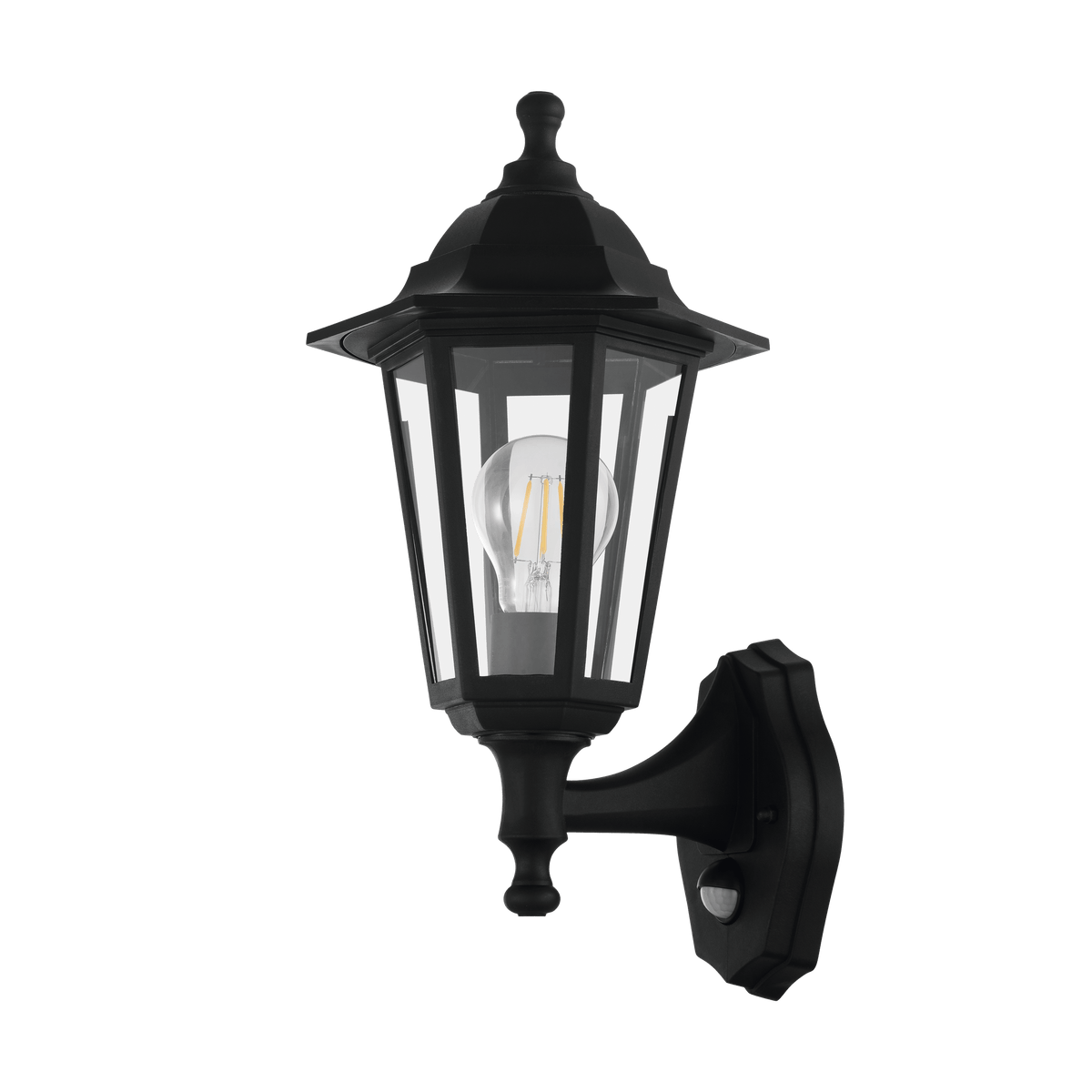
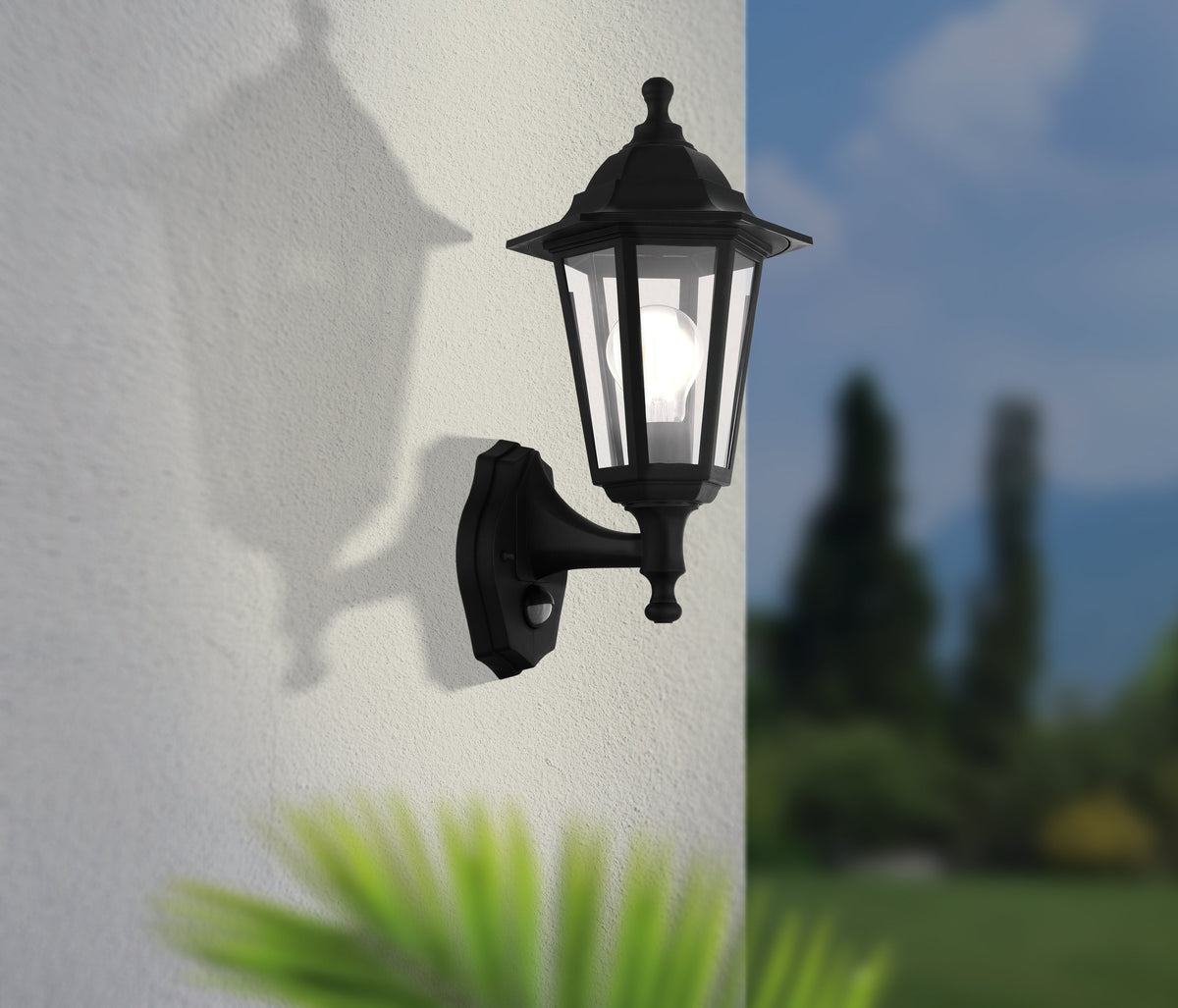
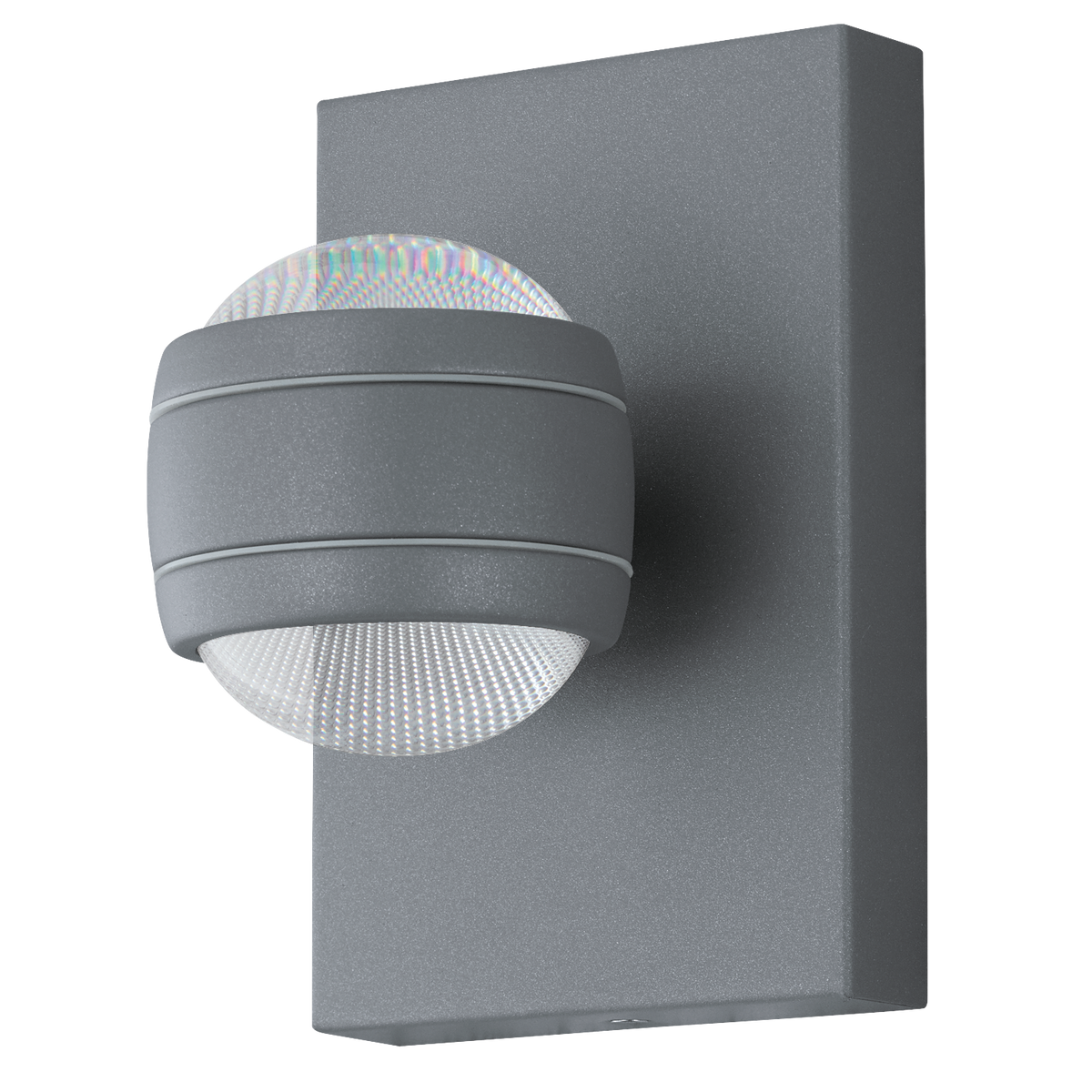
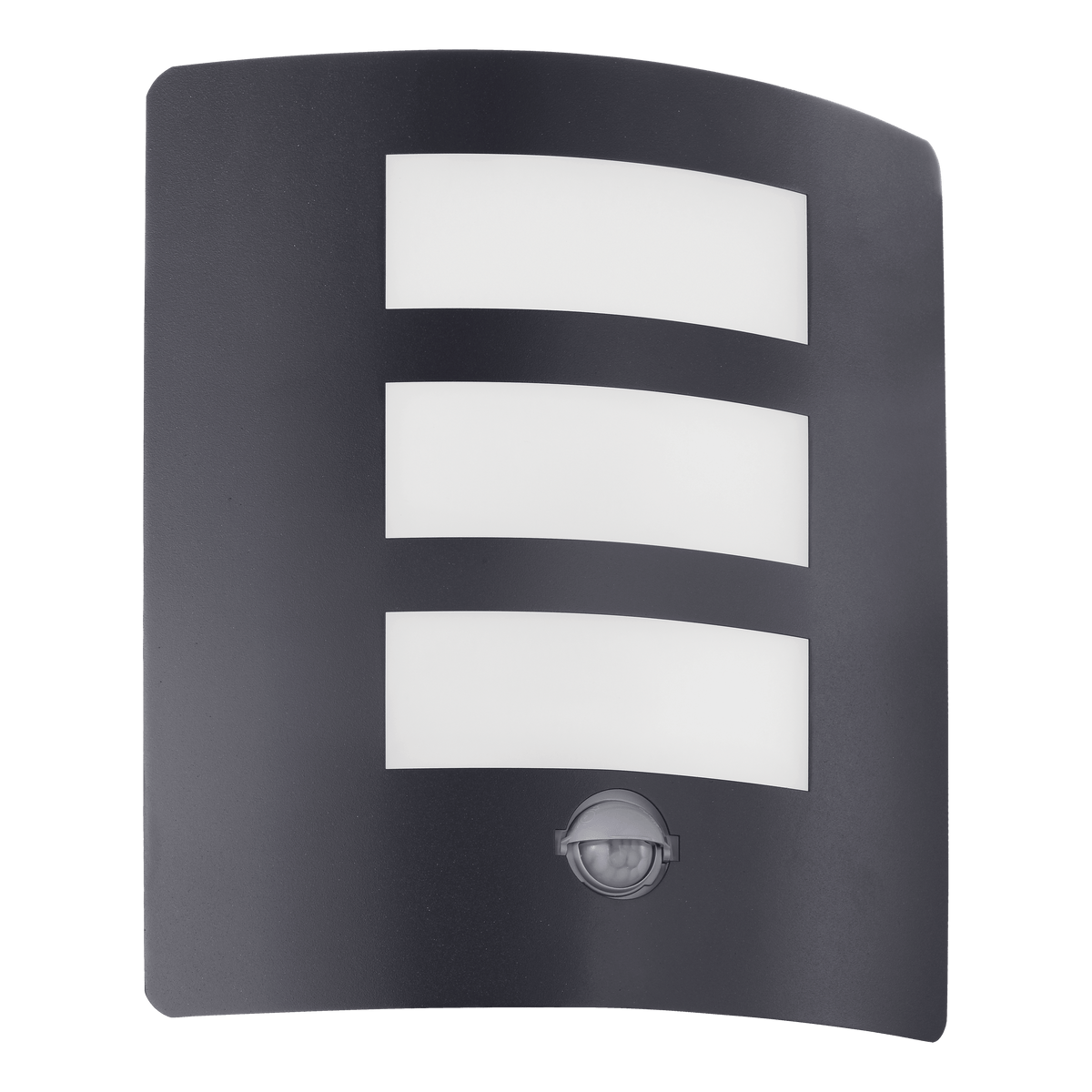
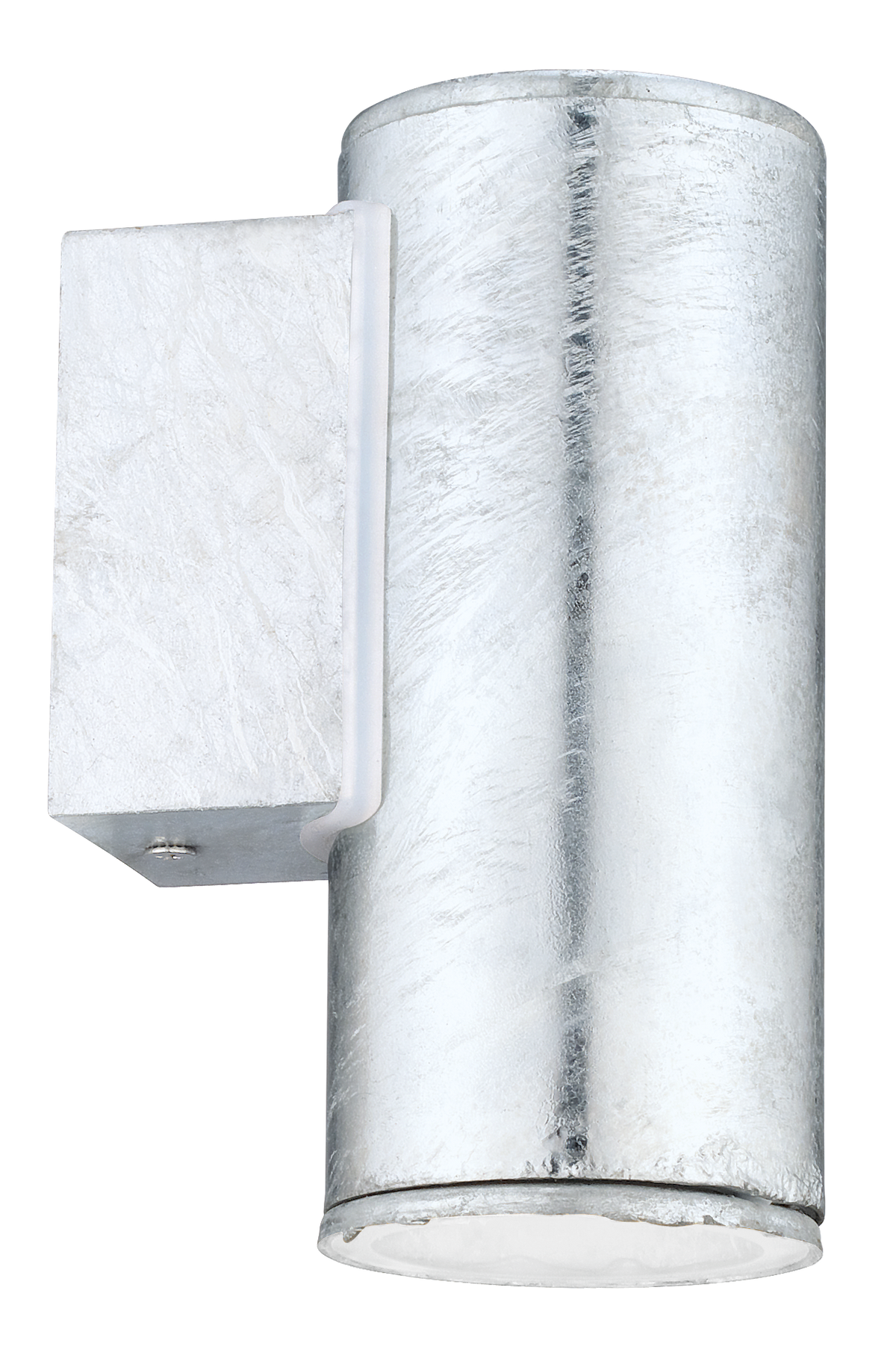
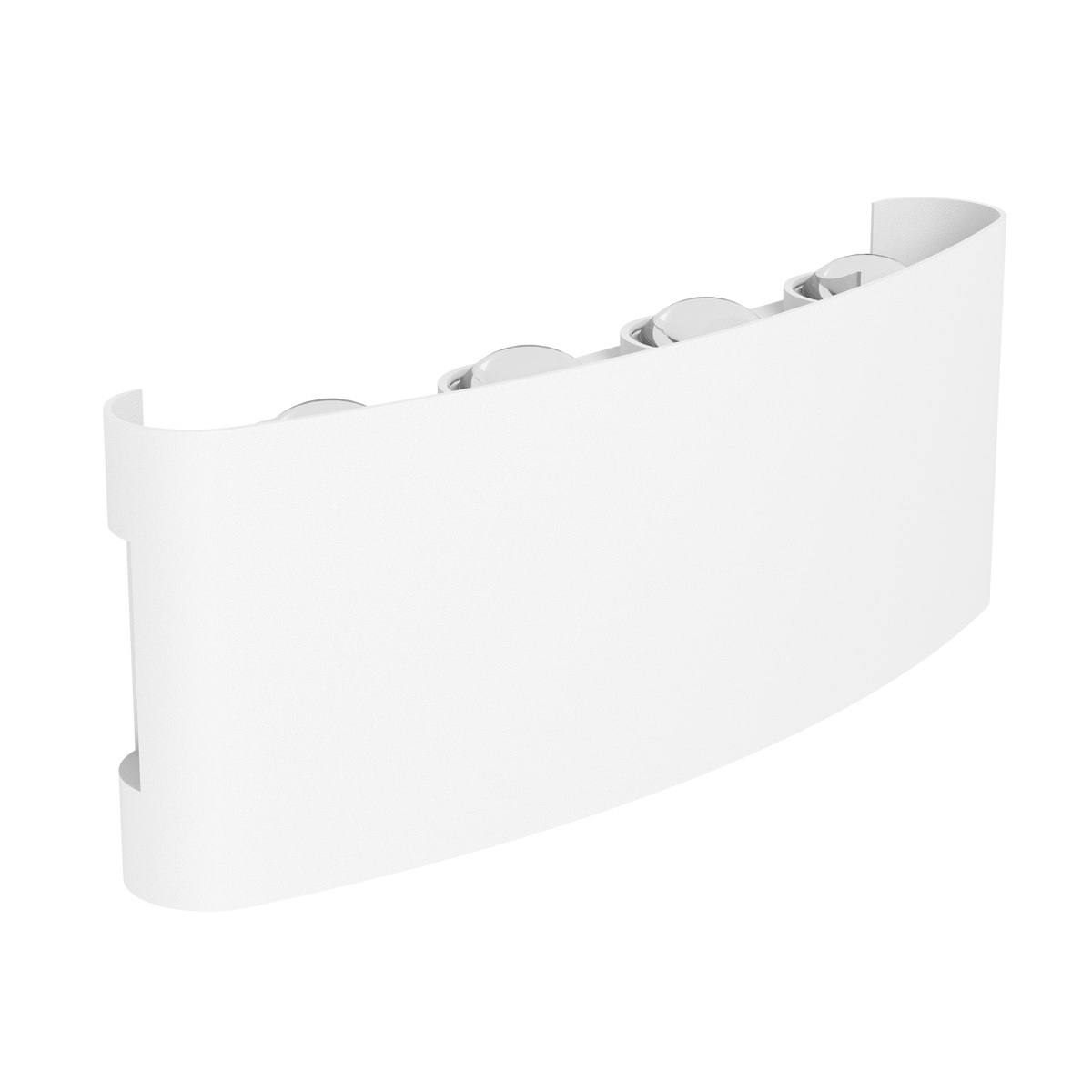
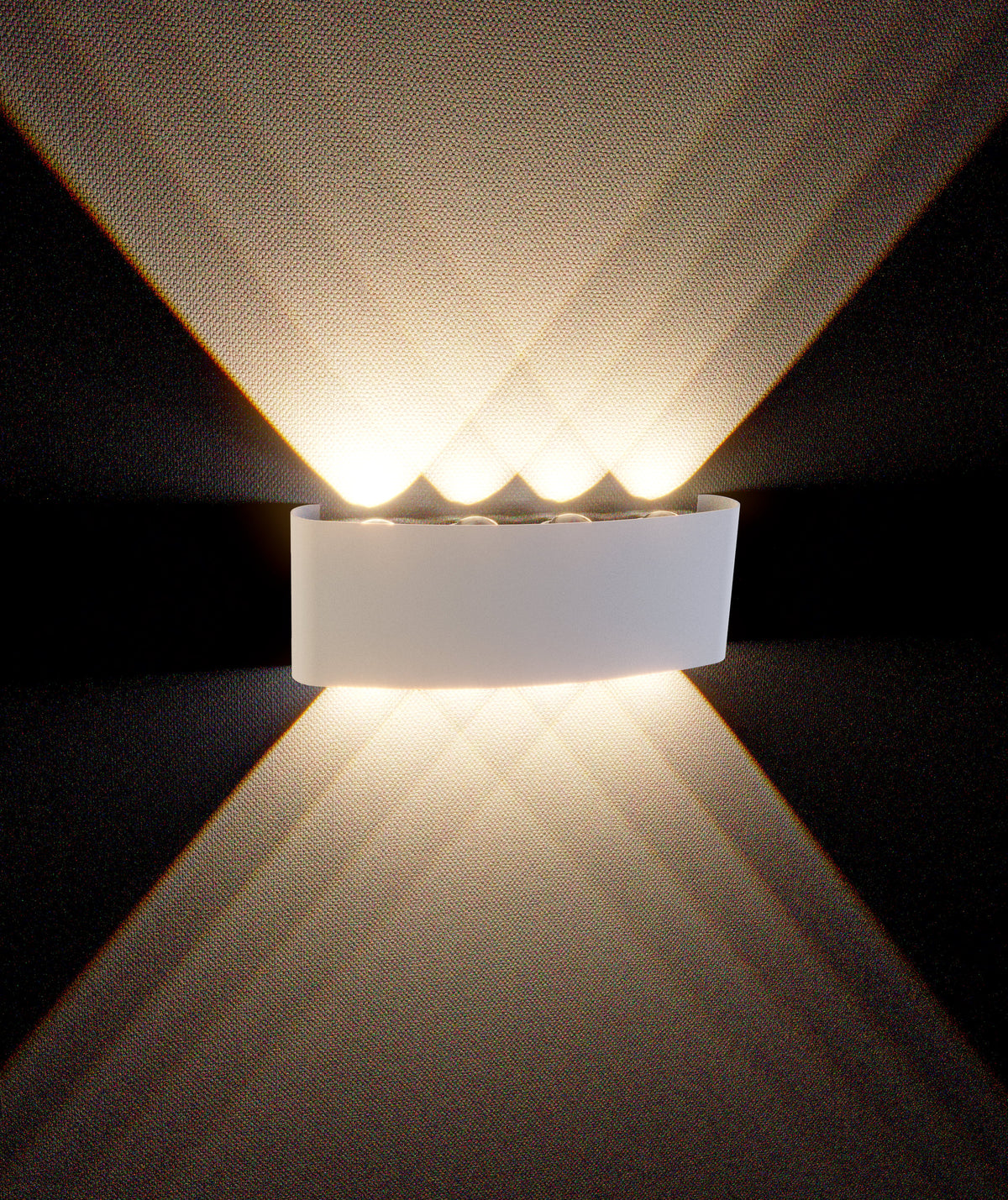
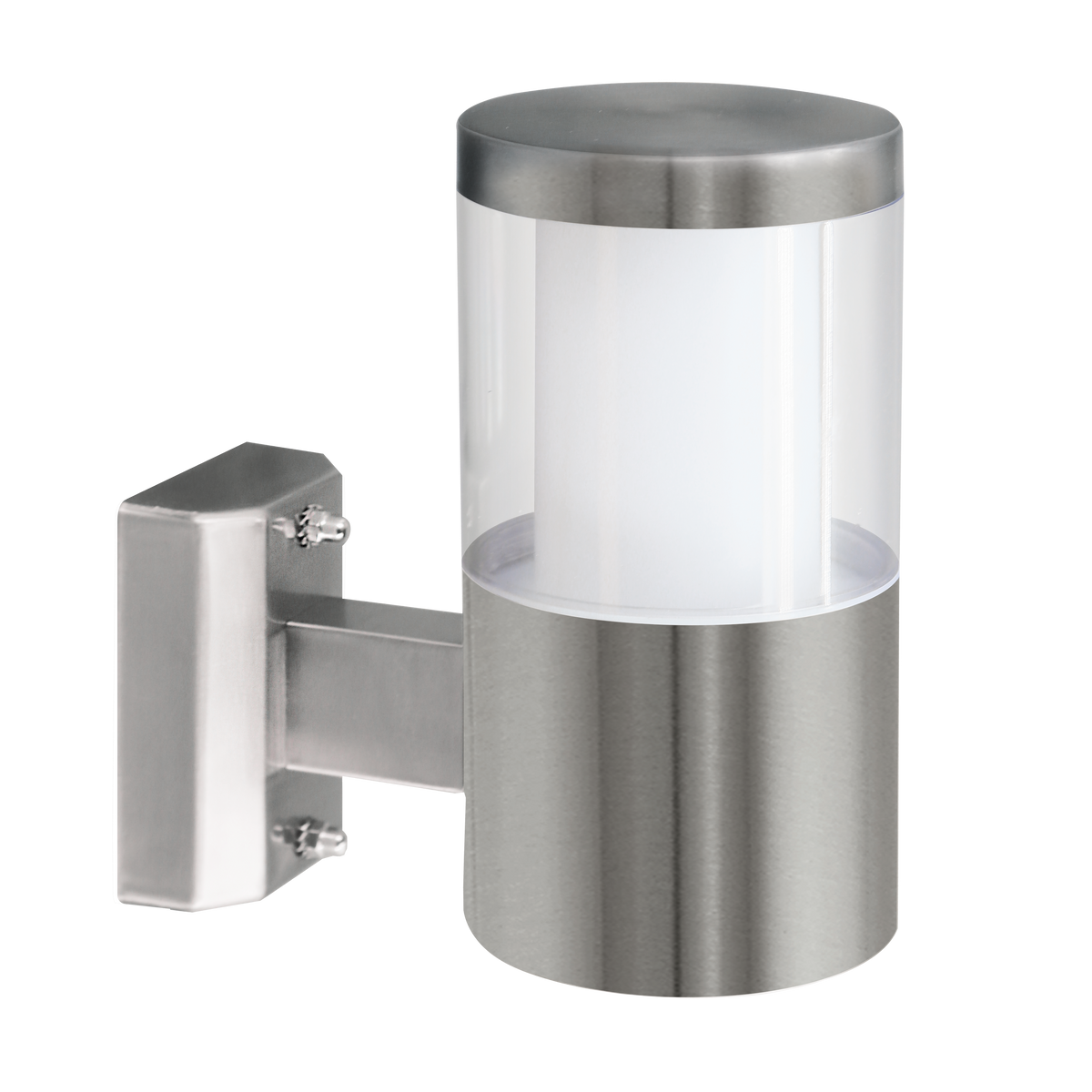
Outdoor wall lights are mounted directly on the façade, beside the entrance, on the garage or on a patio wall. Depending on the design, they direct light downwards, spread it across the surrounding area or emit light both upwards and downwards. This makes them suitable for both functional lighting and decorative lighting accents on the façade. Options include LED models and lights with motion sensors. When choosing a model, the main factors to consider are mounting height, light distribution and IP rating.
Bollard and pedestal lights
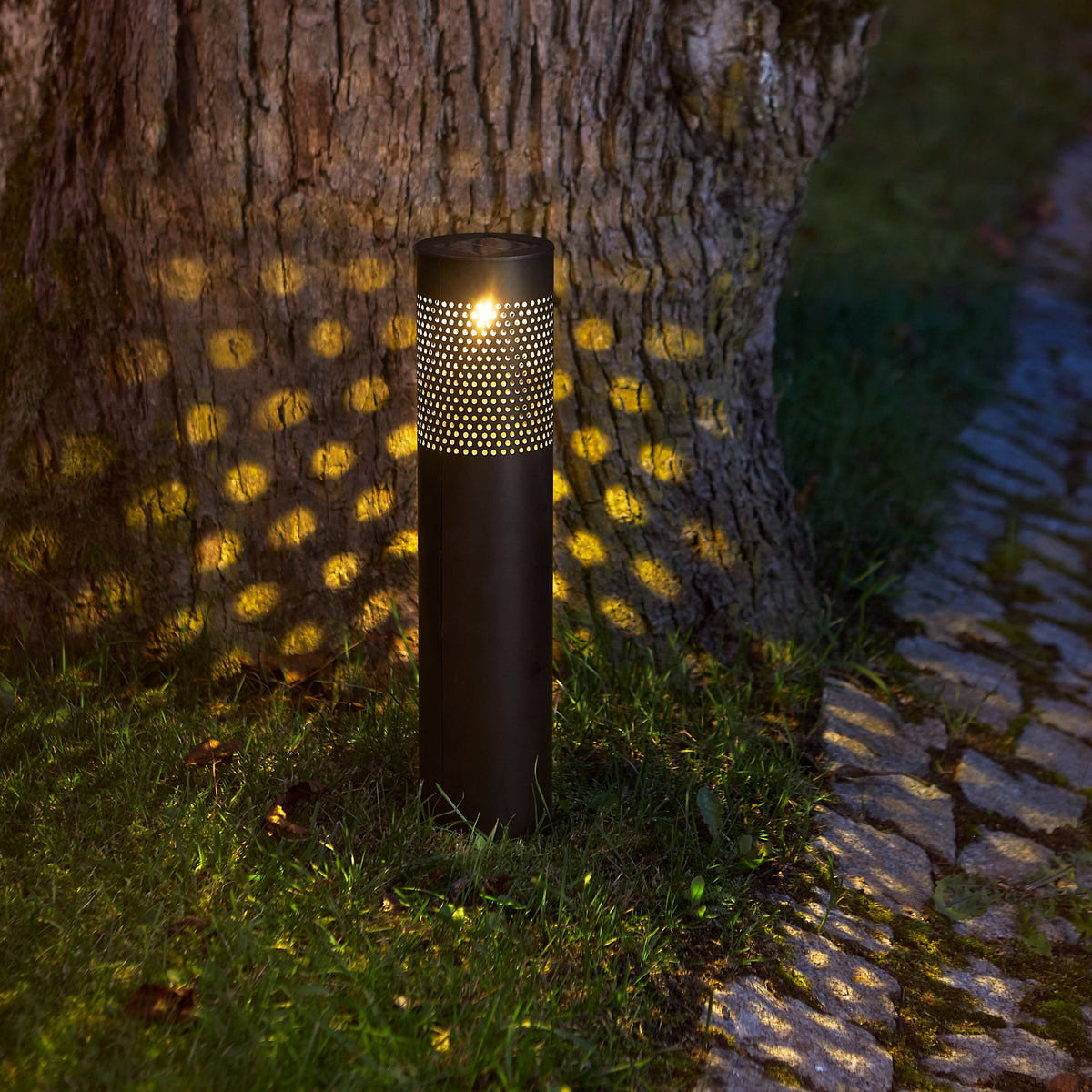
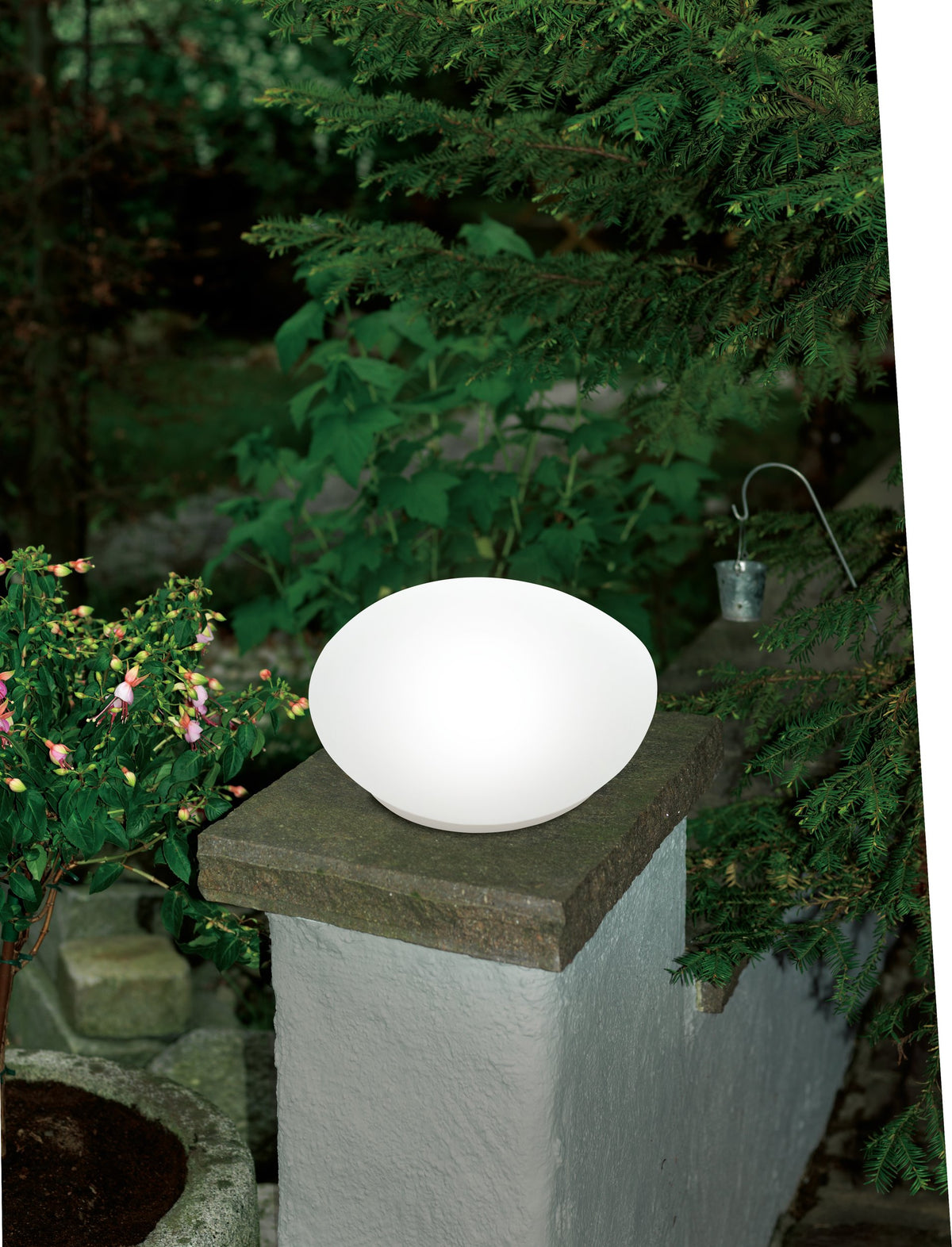
Pedestal lights illuminate walls, patio edges, paths and driveways from a low height. Bollard lights are taller and therefore create more prominent points of orientation. Lower models have a more subtle effect. Taller bollard lights are well suited to longer paths or driveways where the light needs to fall onto the surrounding area from a greater height.
Path lights
Path lights illuminate garden paths, entrances and driveways, making their route easier to see in the dark. Several lights positioned along a path can provide calm and even guidance. The right spacing does not depend on one fixed measurement alone, but on the width of the path, the height of the lights and their light distribution. Depending on the range, options include wired models, solar versions and lights with motion sensors.
Outdoor spotlights
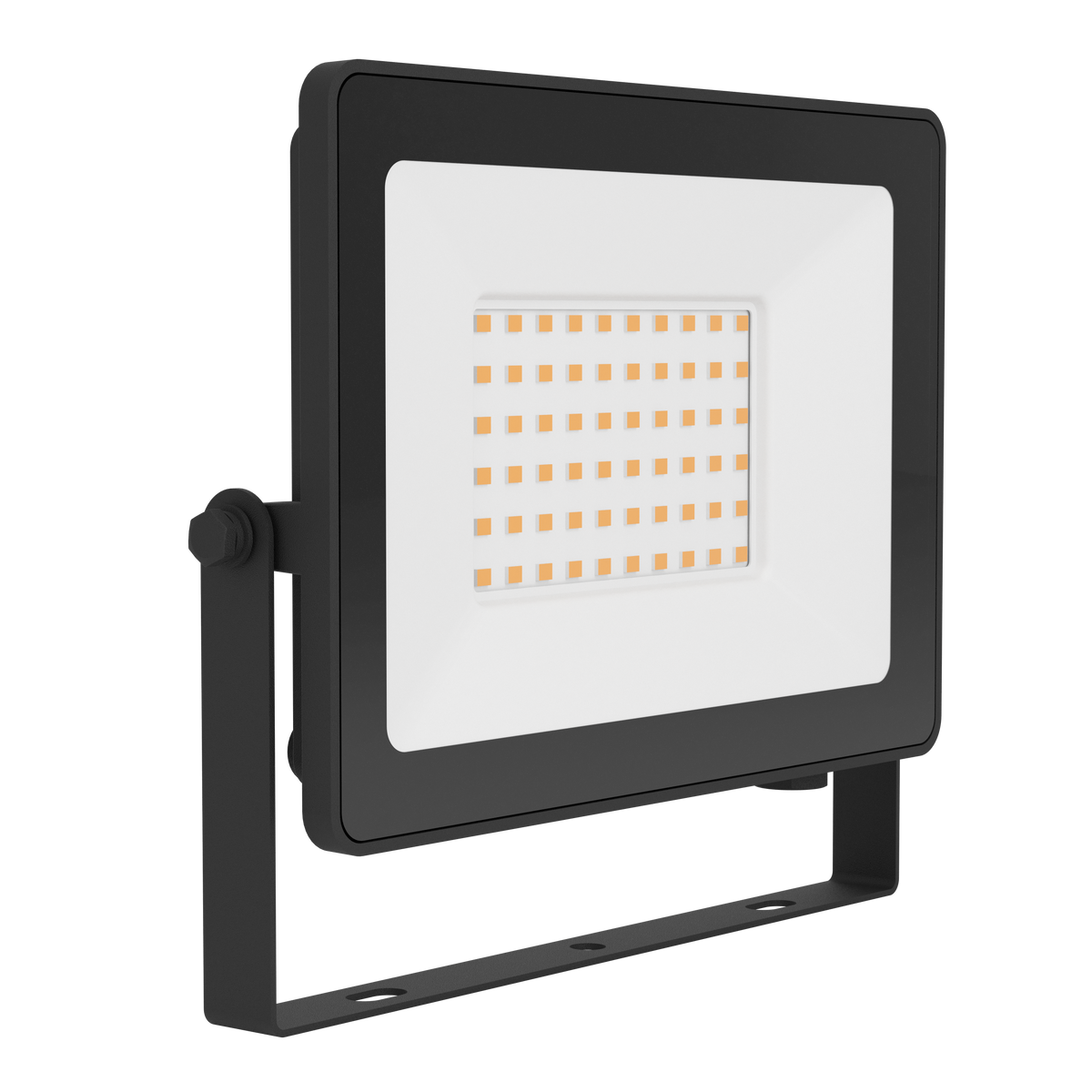
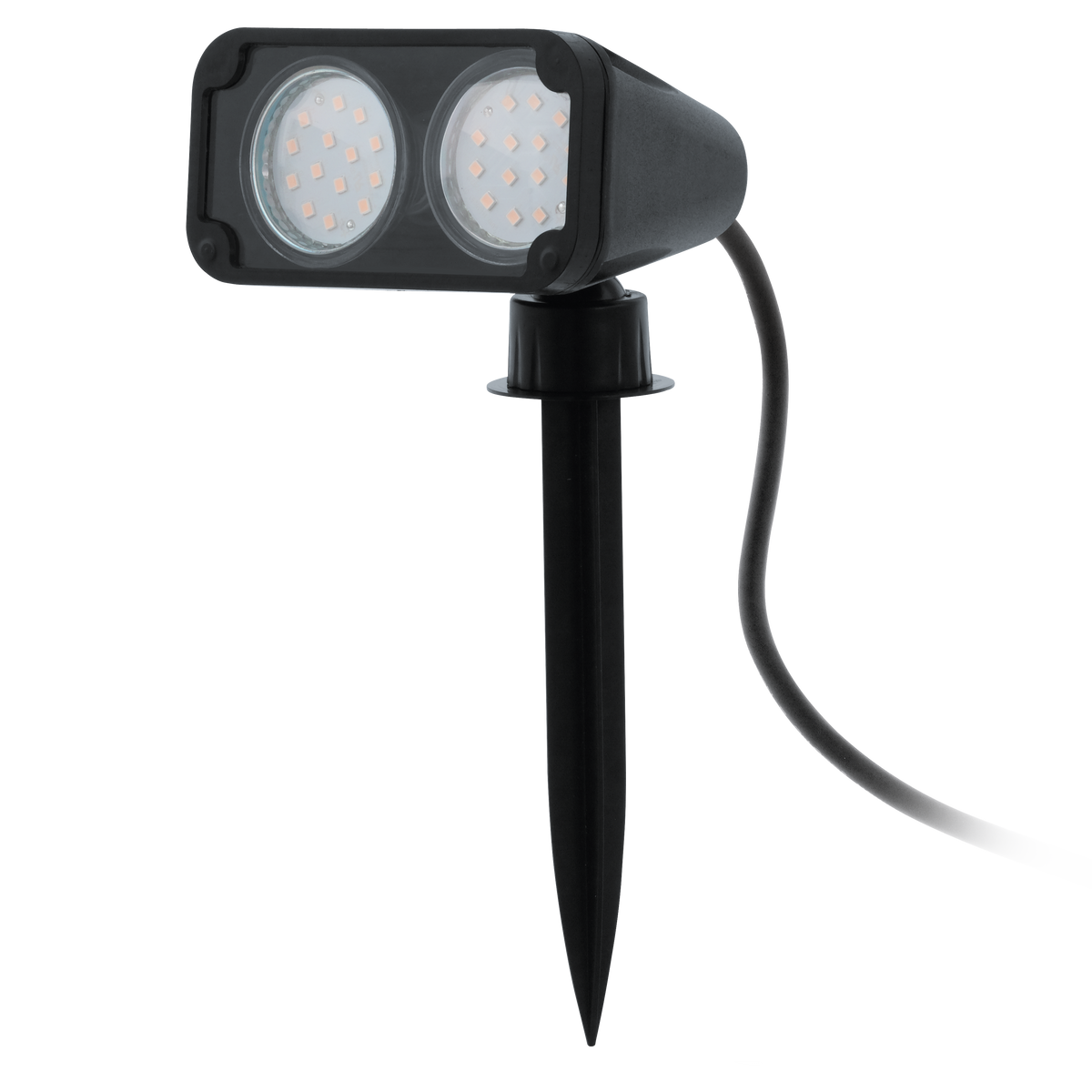
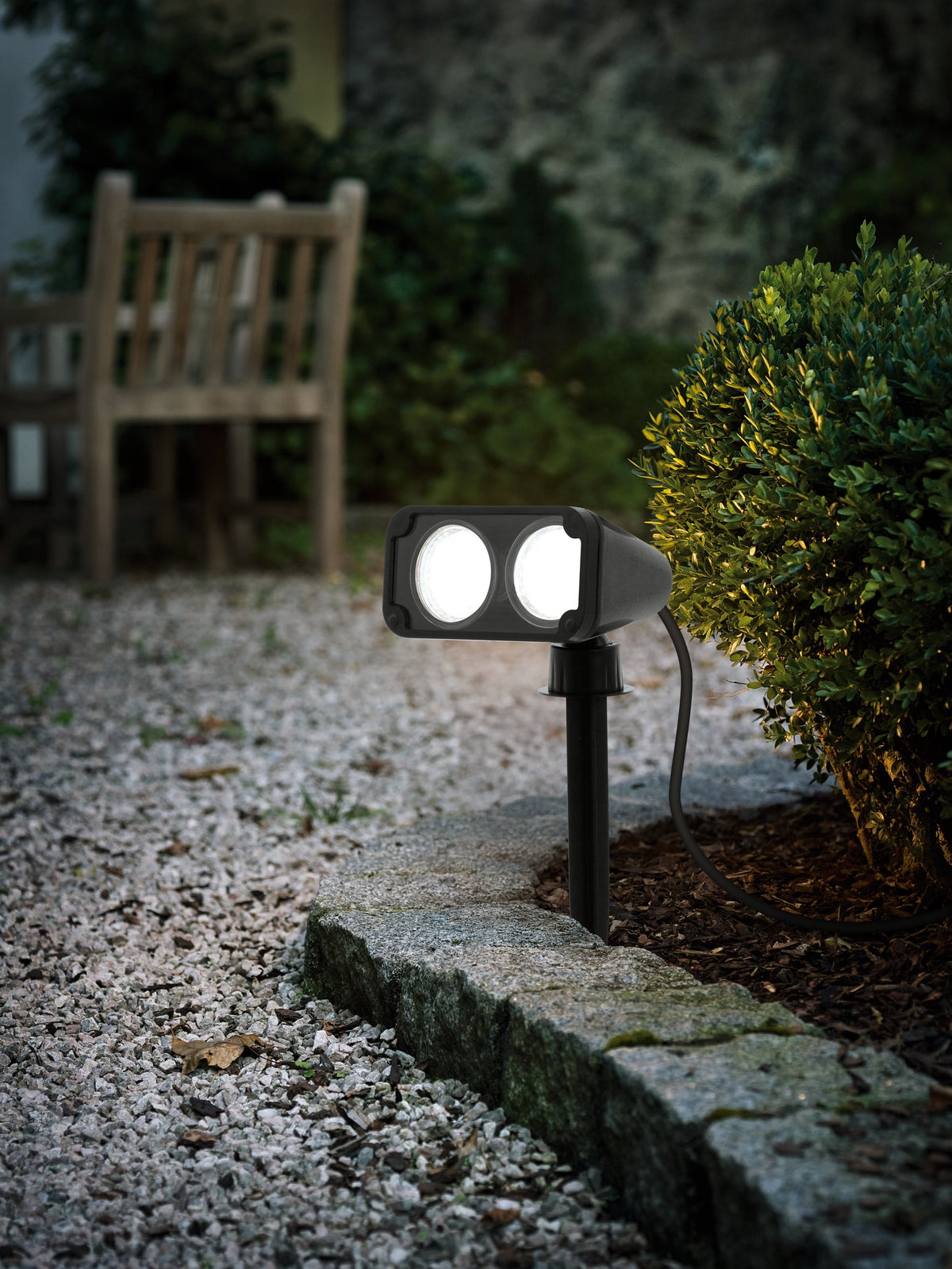
Outdoor spotlights direct light onto larger areas or selected objects. Wide-beam models are suitable for driveways and courtyards, for example. A more focused beam can highlight trees, plants or façade details. Alongside classic LED outdoor spotlights, the range may also include models with motion sensors or solar power. The key factors when choosing a spotlight are light output, beam angle and installation location.
Outdoor ceiling lights
Outdoor ceiling lights are a practical solution for covered entrances, patios, balconies and carports. They require no additional wall or floor space and illuminate the area directly from above. A compact ceiling light may be sufficient for smaller areas. On larger covered patios or in carports, combining several lights can provide more even illumination.
Outdoor floor lamps
Outdoor floor lamps bring light directly to seating areas, garden tables or lounge furniture. They complement permanently installed lighting and create additional lighting zones on patios and balconies. Rechargeable models can be repositioned without permanent installation. Solar versions also provide more flexibility in where they can be placed, but they need a suitable location to achieve good charging performance.
Outdoor string lights
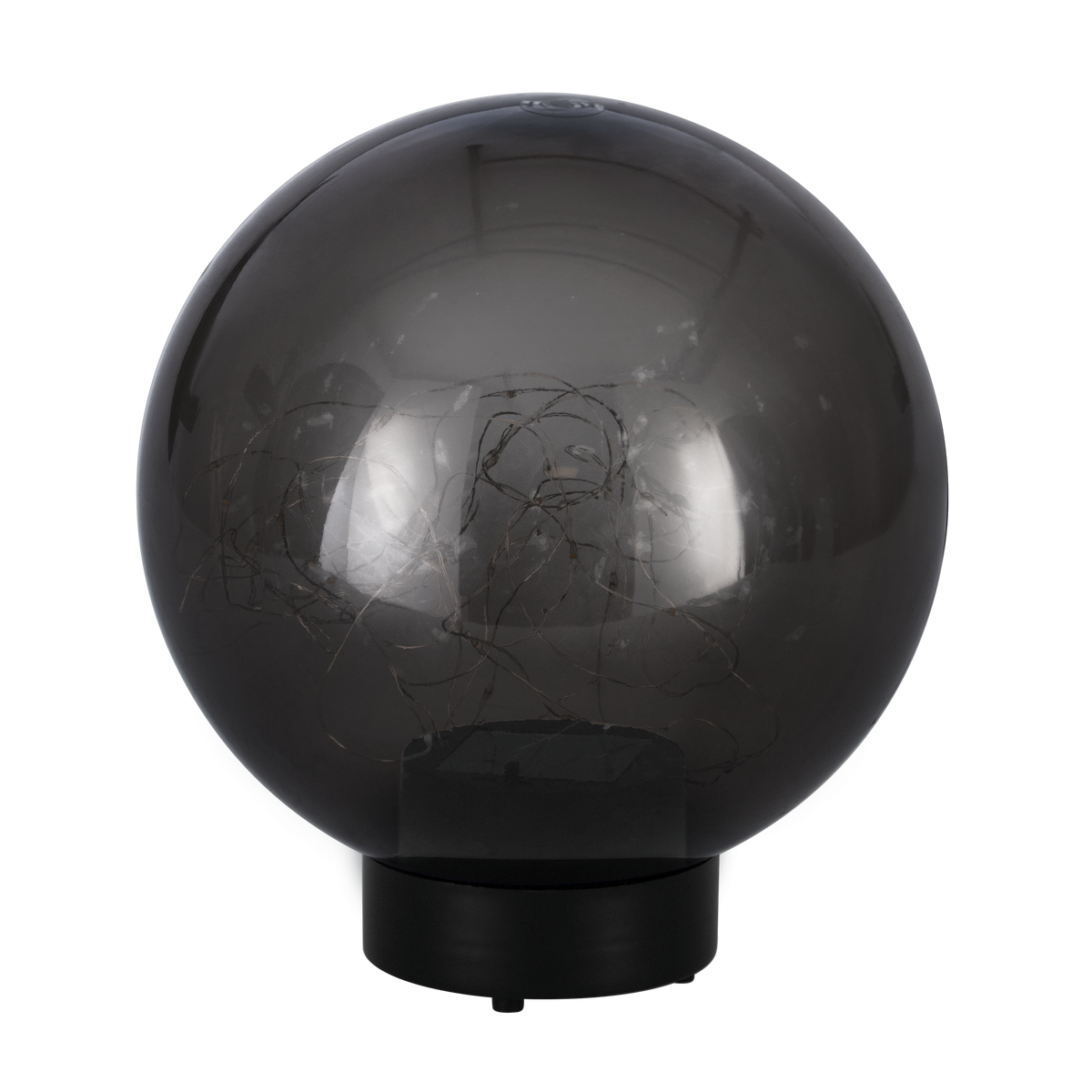
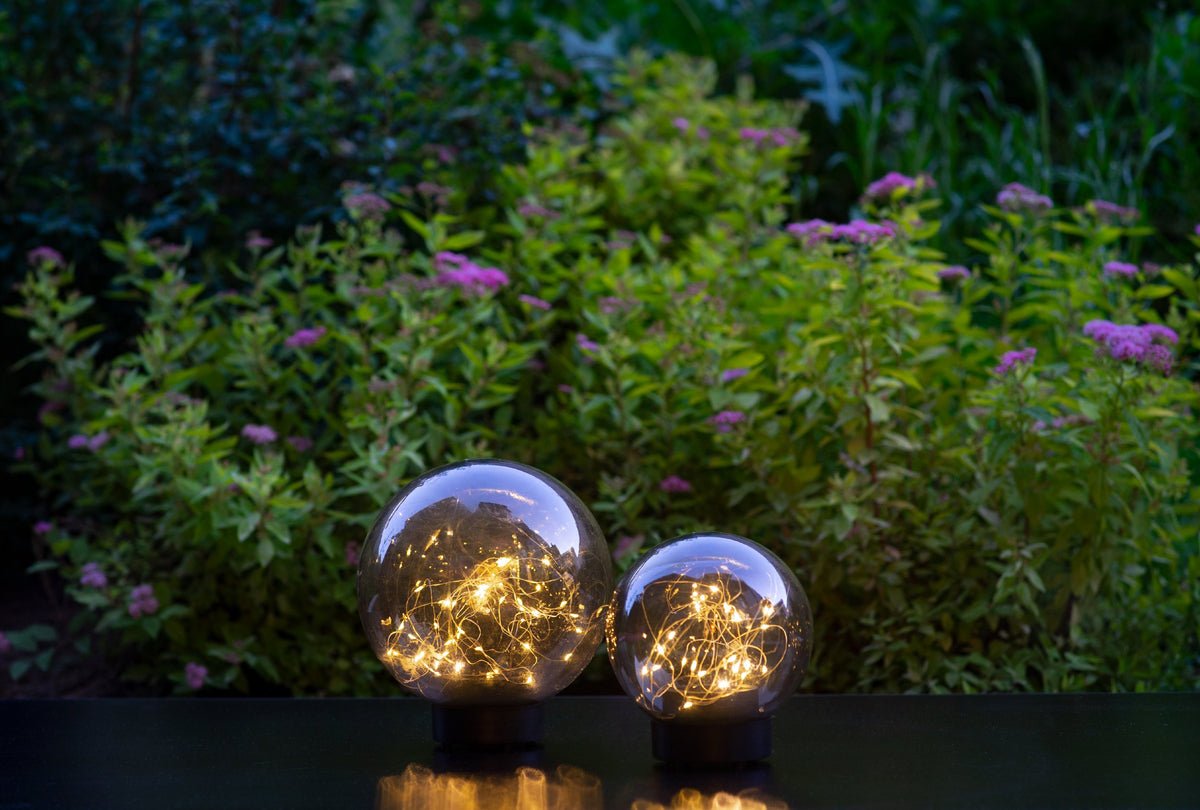
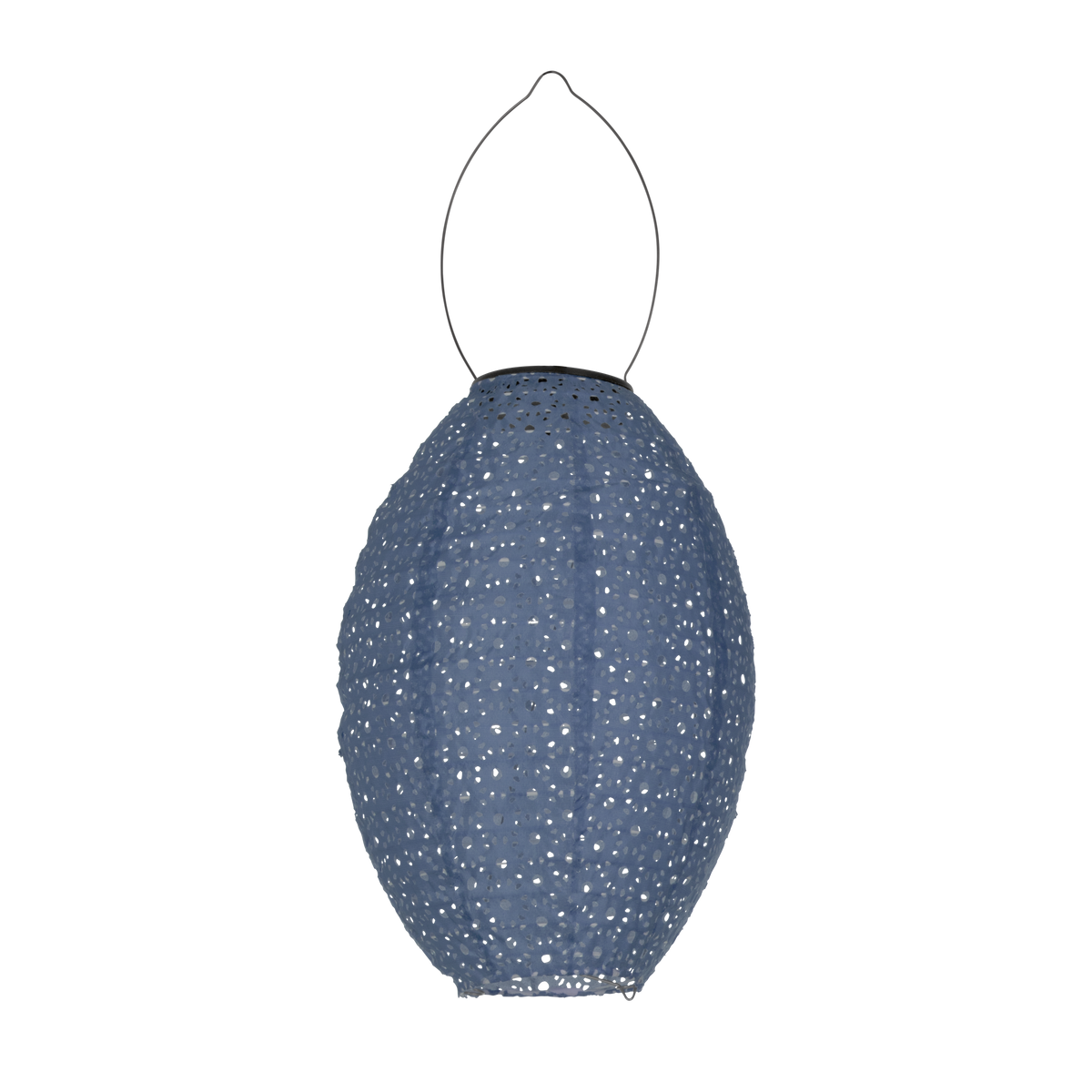
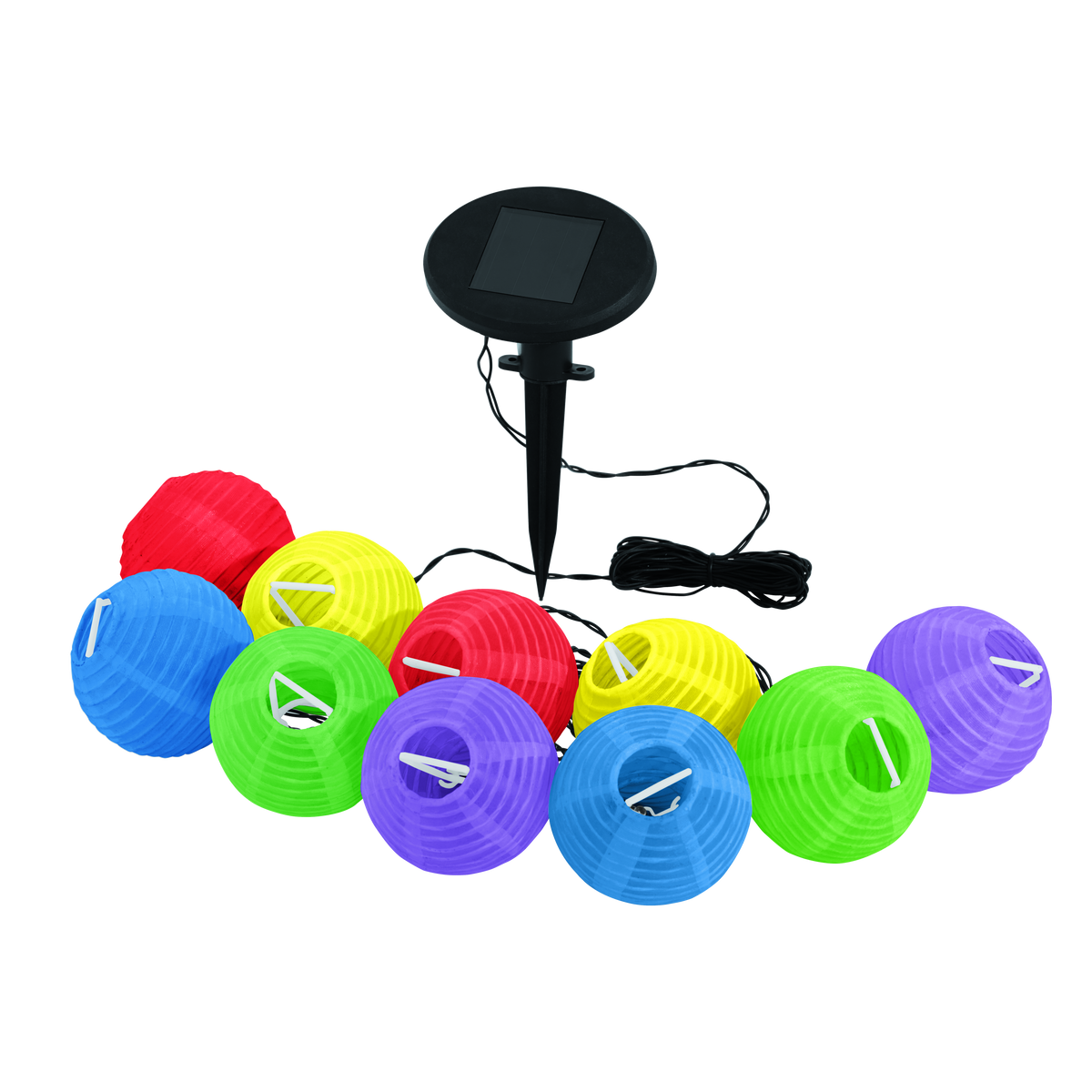
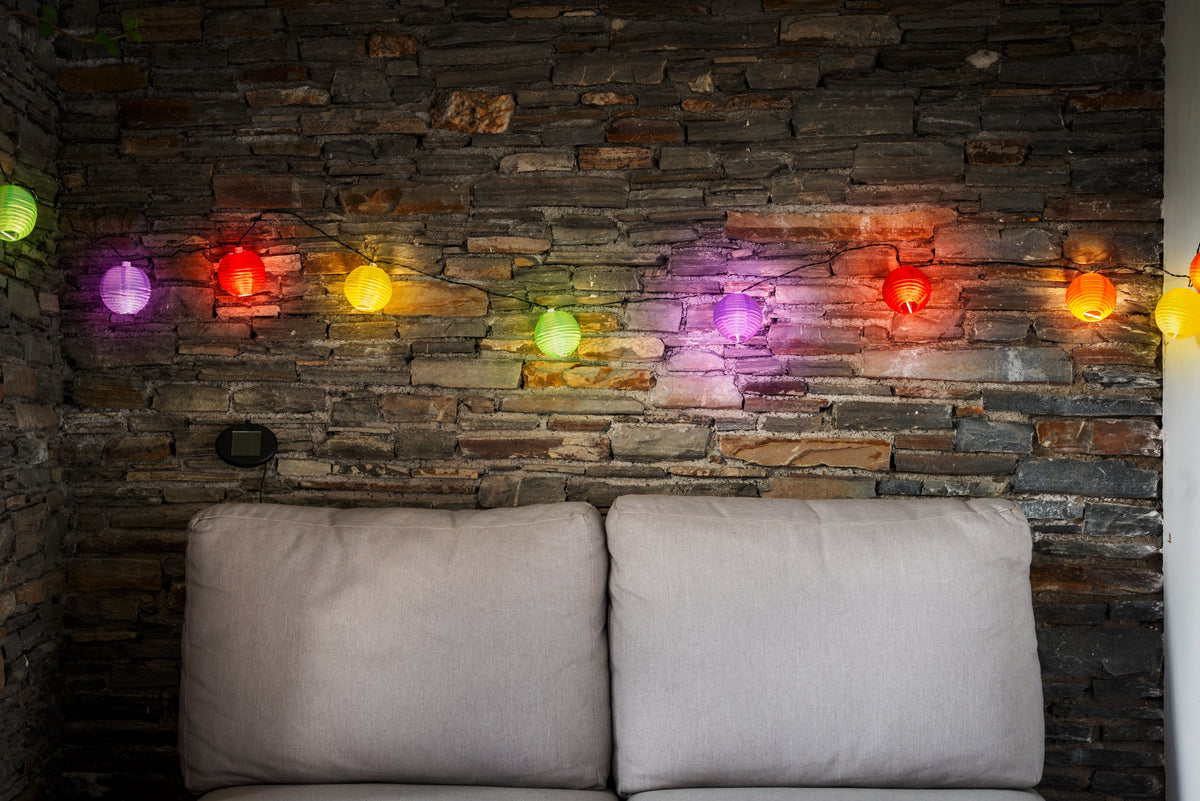
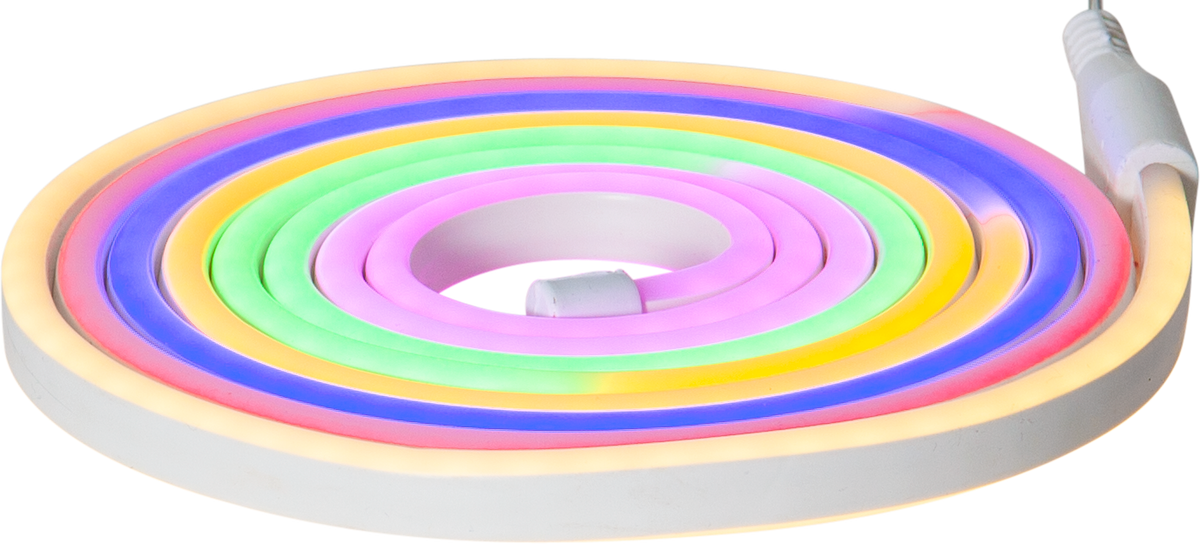
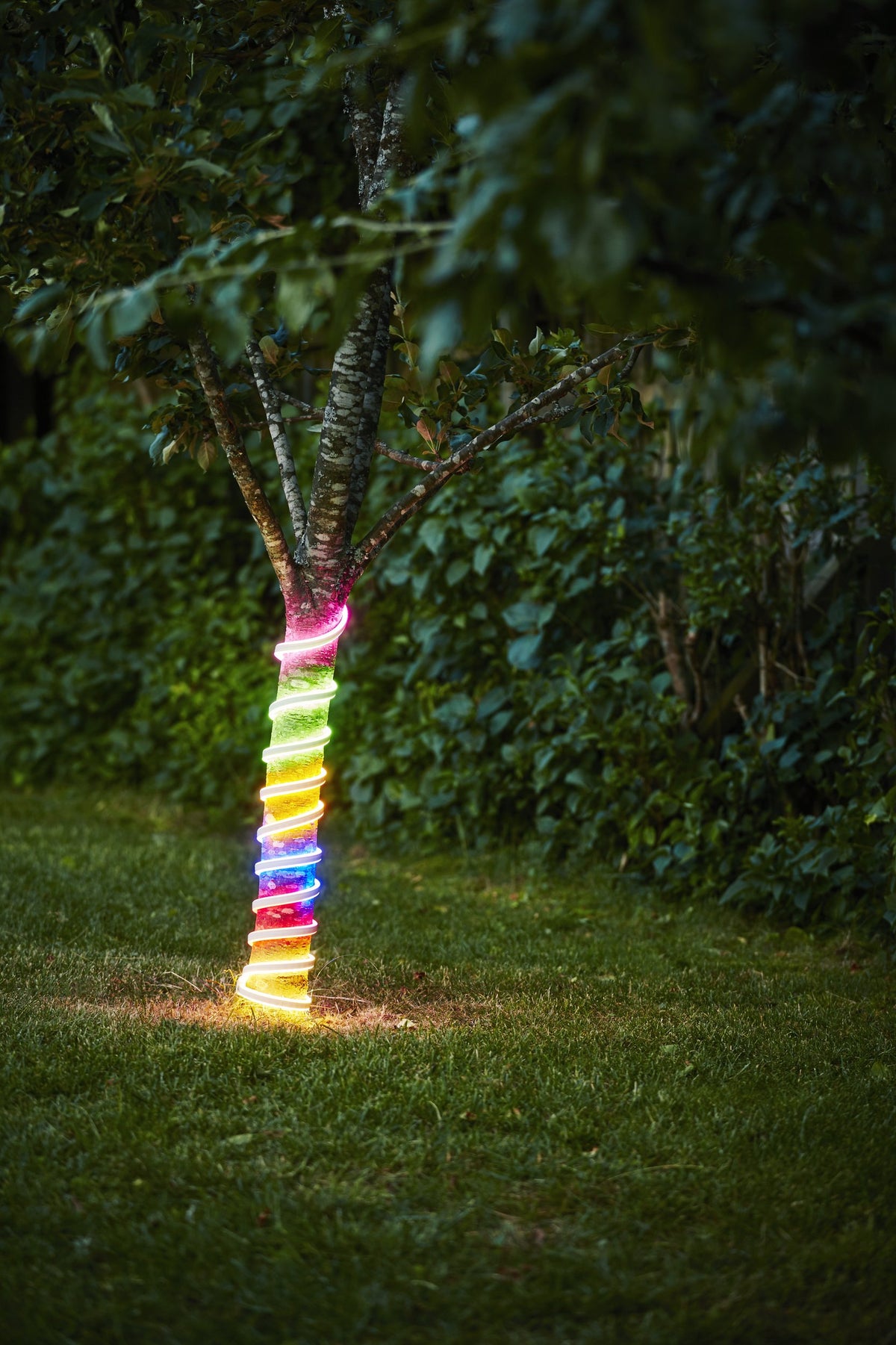
Outdoor string lights add decorative points of light to your outdoor lighting. They can be used on pergolas, railings or around seating areas, for example. Make sure the string lights are suitable for the intended outdoor area. Their length, power supply and IP rating should match the planned use.
What to consider when buying outdoor lighting
When buying outdoor lights, the main factors to consider are the installation location, IP rating, brightness, light colour and power supply. These points can help you narrow down your choice.
IP rating: At least IP44 is often chosen for many outdoor areas exposed to splashing water. IP54 provides greater protection against dust ingress than IP44. Where there is greater exposure to water, an IP rating such as IP65 or higher may be required depending on the installation location. Always refer to the product specifications and the conditions at the intended location.
Brightness: The required light output depends on the size of the area, how it is used and the number of lights. Lower light output may be sufficient for smaller outdoor areas or atmospheric lighting, while larger or more functionally used areas may require more light. Light distribution, installation height and the position of the lights also affect the actual requirements.
Light colour: Warm white at 2,700–3,300 K is often chosen for patios, balconies and comfortably designed garden areas. Neutral white at 3,300–5,300 K can be suitable for entrances, paths and other functional areas. Daylight white at over 5,300 K is more appropriate where a particularly clear and functional lighting effect is desired. Light colour remains a guide and can be adapted to personal preferences.
Power supply: Permanently wired outdoor lights provide consistent light output. Rechargeable lights are suitable for areas where greater flexibility is required. Solar lights do not need a direct power connection, but their performance depends more heavily on their location and exposure to sunlight.
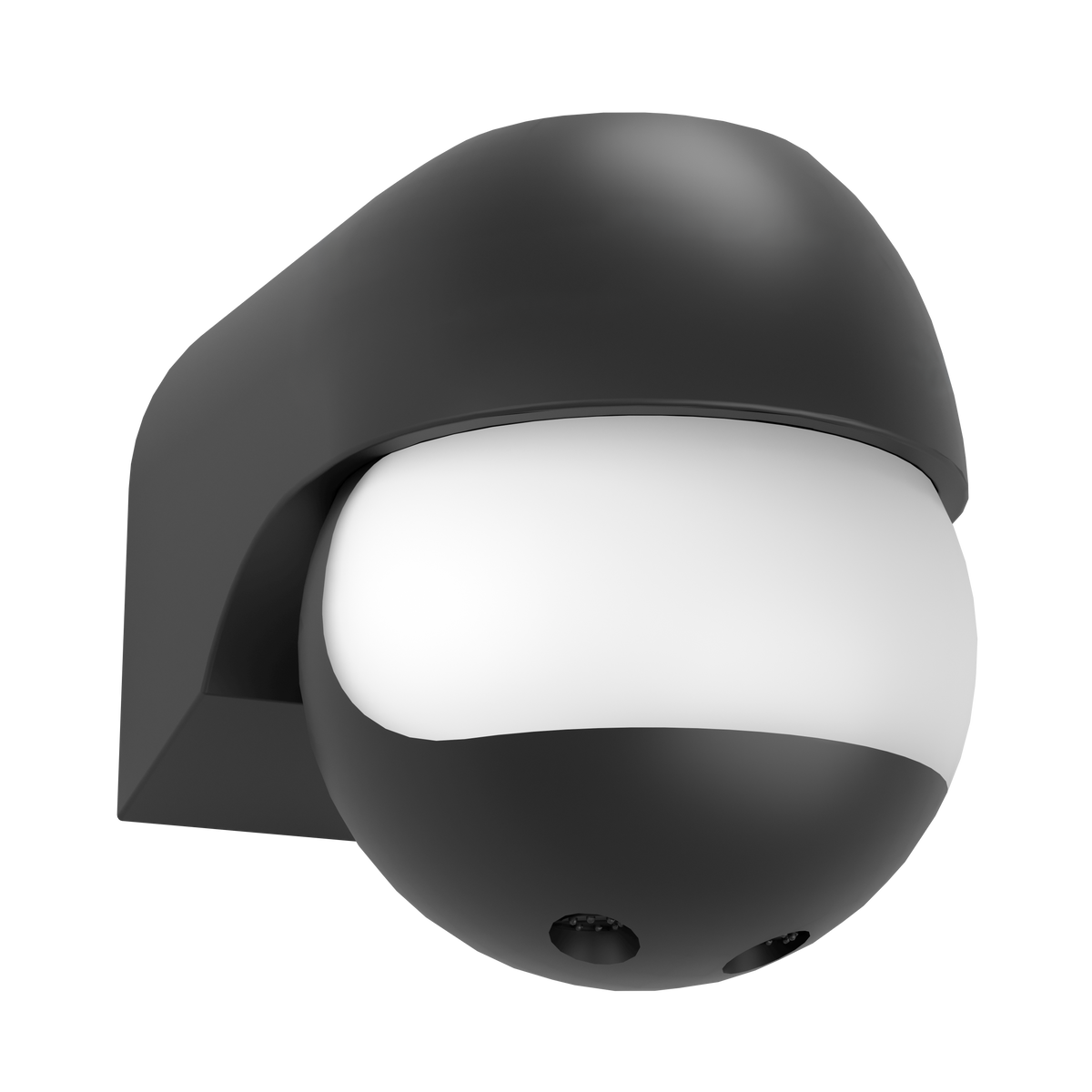
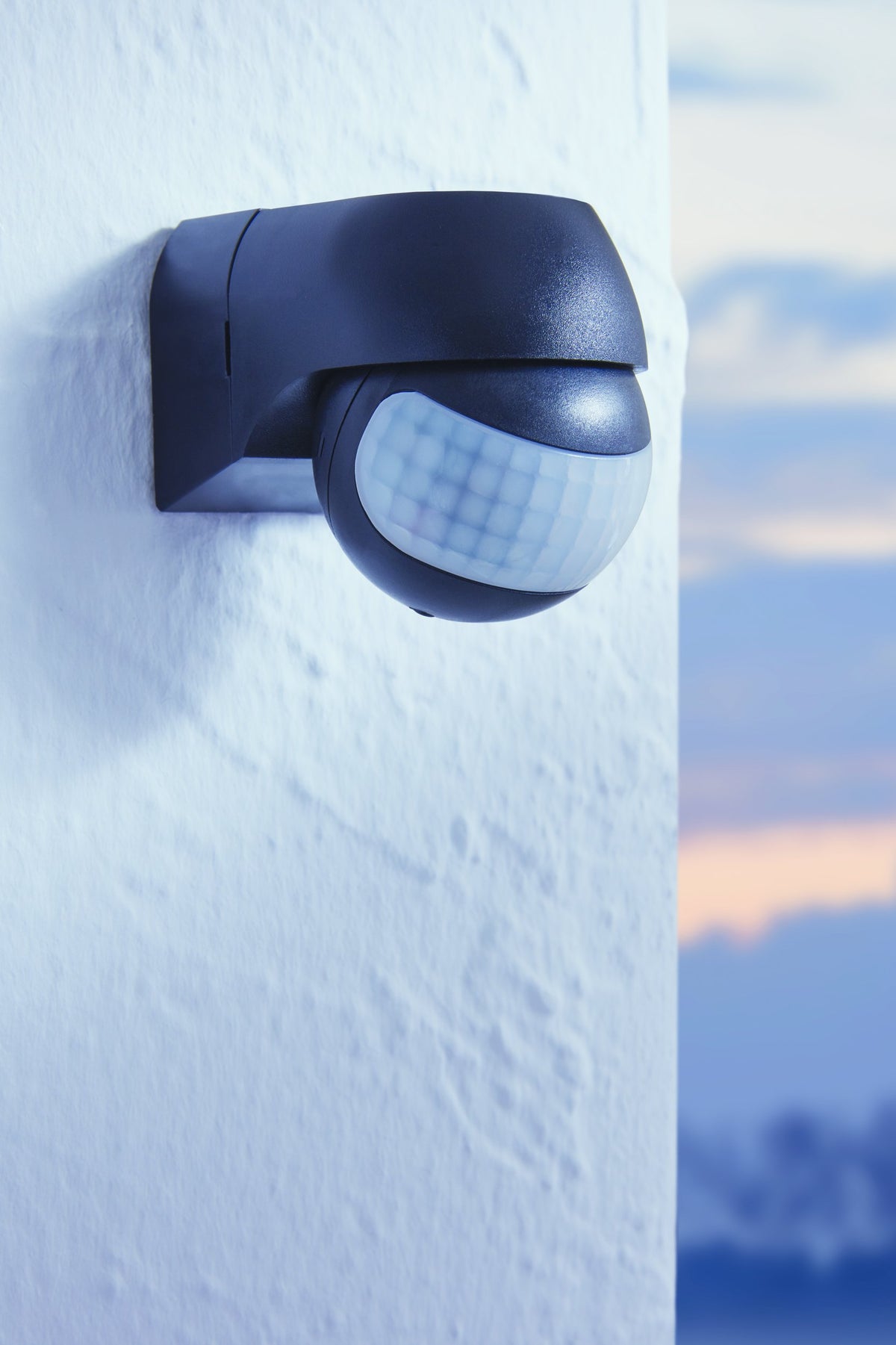
Motion sensor: A motion sensor can be practical at entrances, garages, driveways or less frequently used paths. The light switches on automatically when movement is detected. When comparing models, consider the detection range, detection angle and adjustable lighting duration.
FAQs
Which outdoor light is suitable for an entrance?
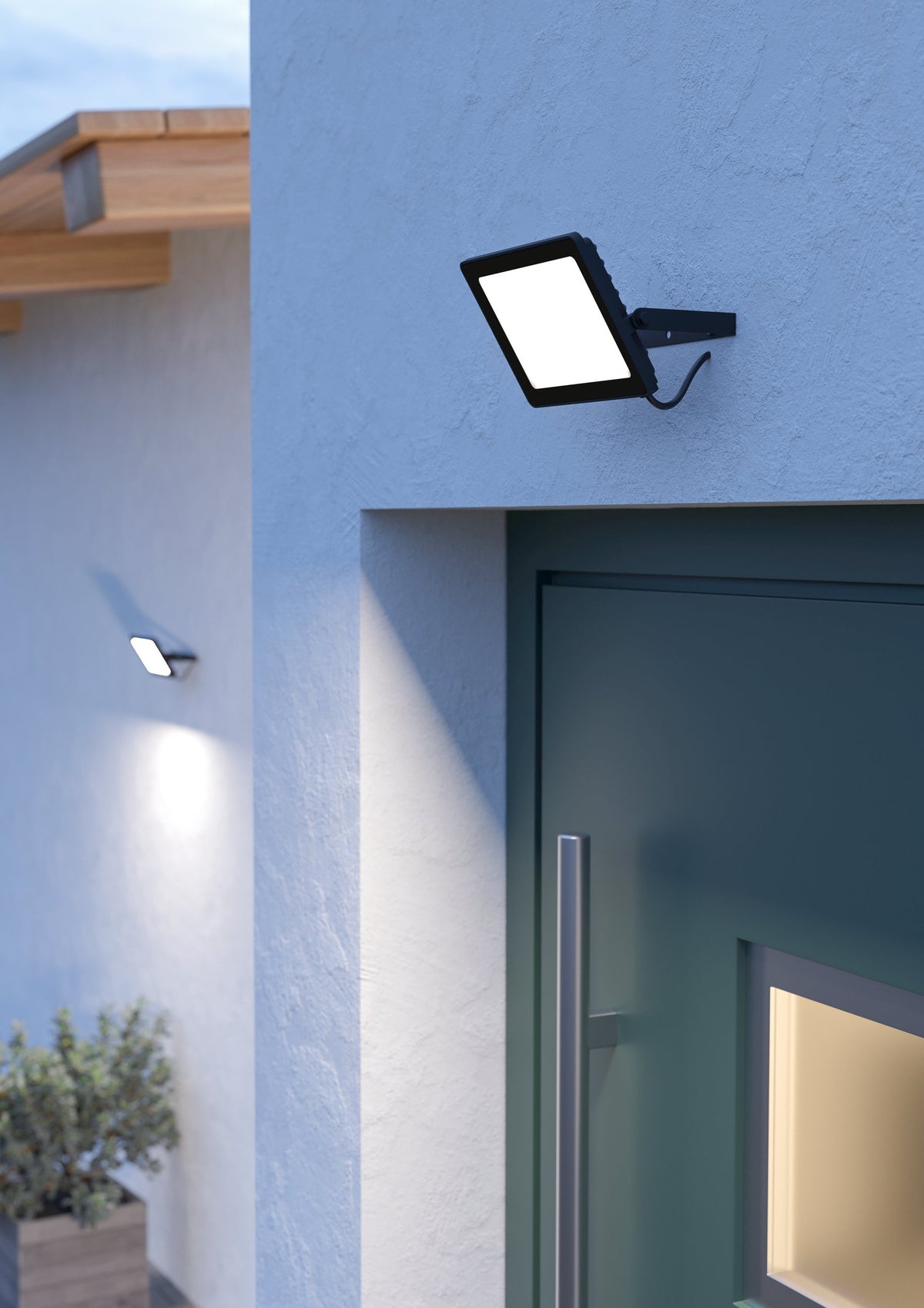
Outdoor wall lights are often used around entrances. If the area is covered, an outdoor ceiling light may also be suitable. A motion sensor is practical if you want the light to switch on automatically as someone approaches.
What IP rating should an outdoor light have?
At least IP44 is often chosen for many protected outdoor areas or areas exposed to splashing water. Where there is greater exposure to dust or water, IP54, IP65 or higher ratings may be required depending on the installation location.
How many lumens should an outdoor light have?
The amount of light required mainly depends on the size of the area, how it is used, the light distribution and the number of lights. Atmospheric lighting usually requires less light than paths, entrances or larger functional areas. The lumen rating of each model helps you compare different outdoor lights.
Which light colour is suitable for gardens and patios?
Warm white at 2,700–3,300 K is often chosen for patios, balconies and garden areas used as living spaces. Neutral white at 3,300–5,300 K can be a good alternative for paths, access areas and functional zones.
Solar or wired outdoor lighting – which is better?
Solar lights are practical when there is no power connection at the intended location. Permanently wired outdoor lights provide more consistent light output. With solar models, consider sunlight exposure, charging time and the desired operating time.
When is an outdoor light with a motion sensor useful?
A motion sensor is particularly useful at entrances, driveways, garages and less frequently used paths. The light is activated automatically when movement is detected. Detection range, detection angle and lighting duration should suit the respective area.