

Filters






Overview of Outdoor Lights
Well lit on terraces, gardens, and balconies
Outdoor lighting brings practical and decorative illumination to entrances, exterior walls, patios, balconies, gardens, pathways and driveways. At EGLO, you'll find outdoor lights for a wide range of applications, from wall and ceiling lights to pathway lights, bollard lights, outdoor spotlights, floor lamps and decorative string lights.
The right outdoor light depends primarily on where and how it will be used. Around entrances, pathways and driveways, visibility and orientation are usually the priority. On patios, balconies and seating areas, the atmosphere created by the light is also important.
By combining different types of outdoor and garden lighting, you can create a lighting scheme suited to the individual areas around your home.
Outdoor Lights for Every Area Around Your Home
Different types of outdoor lights perform different roles around the home.
Outdoor wall lights can illuminate entrances, exterior walls and patio areas, while outdoor ceiling lights provide illumination beneath canopies, covered balconies and carports.
For garden paths and driveways, pathway, pedestal and bollard lights can provide lower-level illumination and help define routes through outdoor spaces.
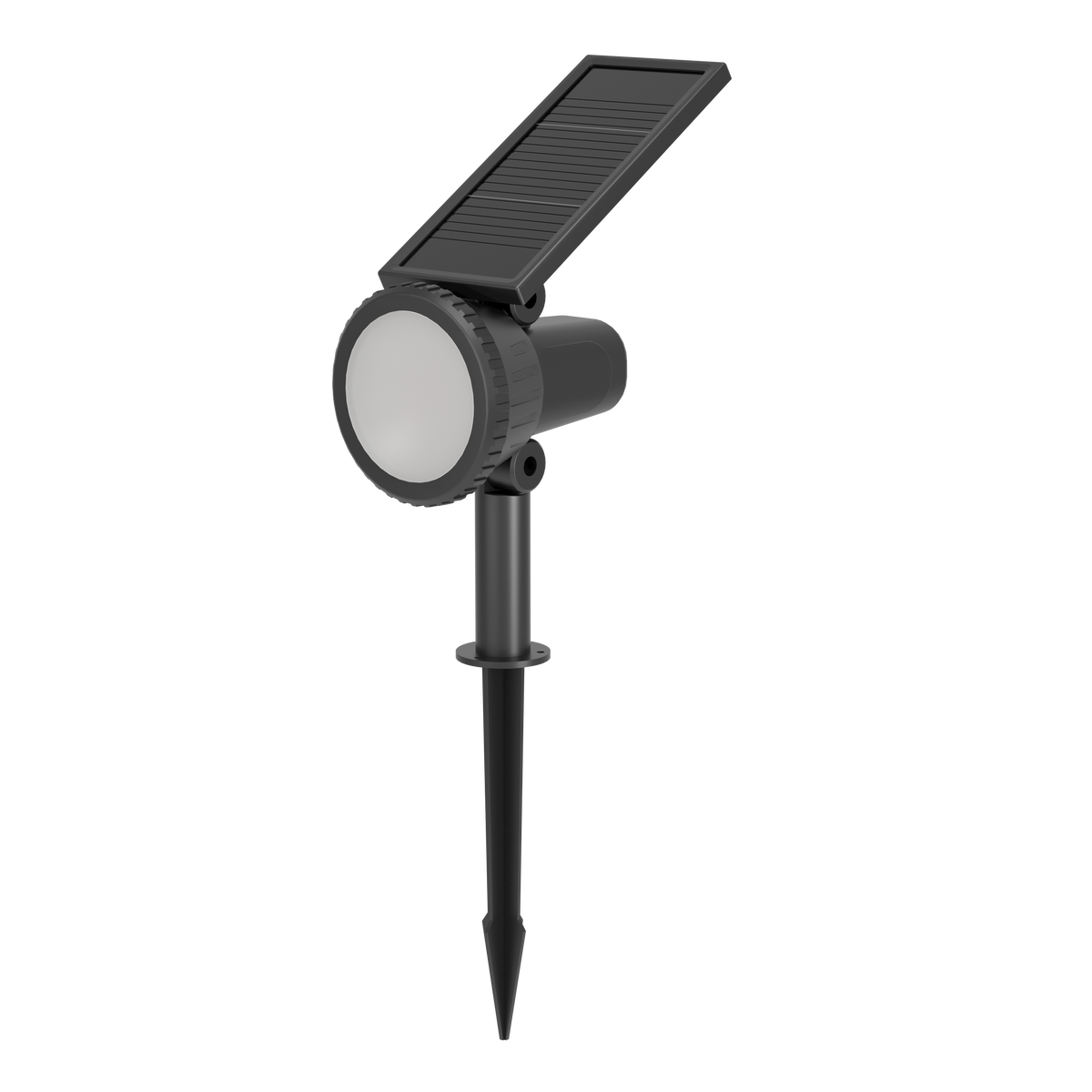
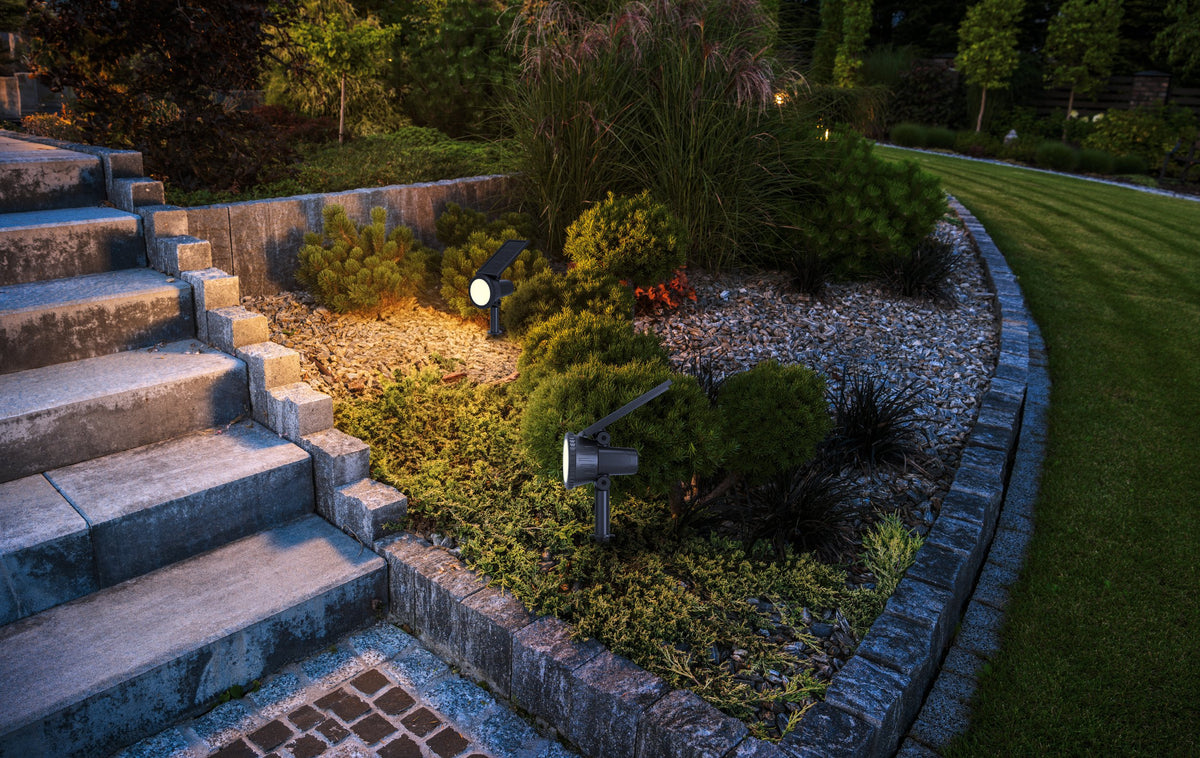
For larger areas or more focused illumination, outdoor spotlights can direct light towards driveways, courtyards, plants, trees or architectural features.
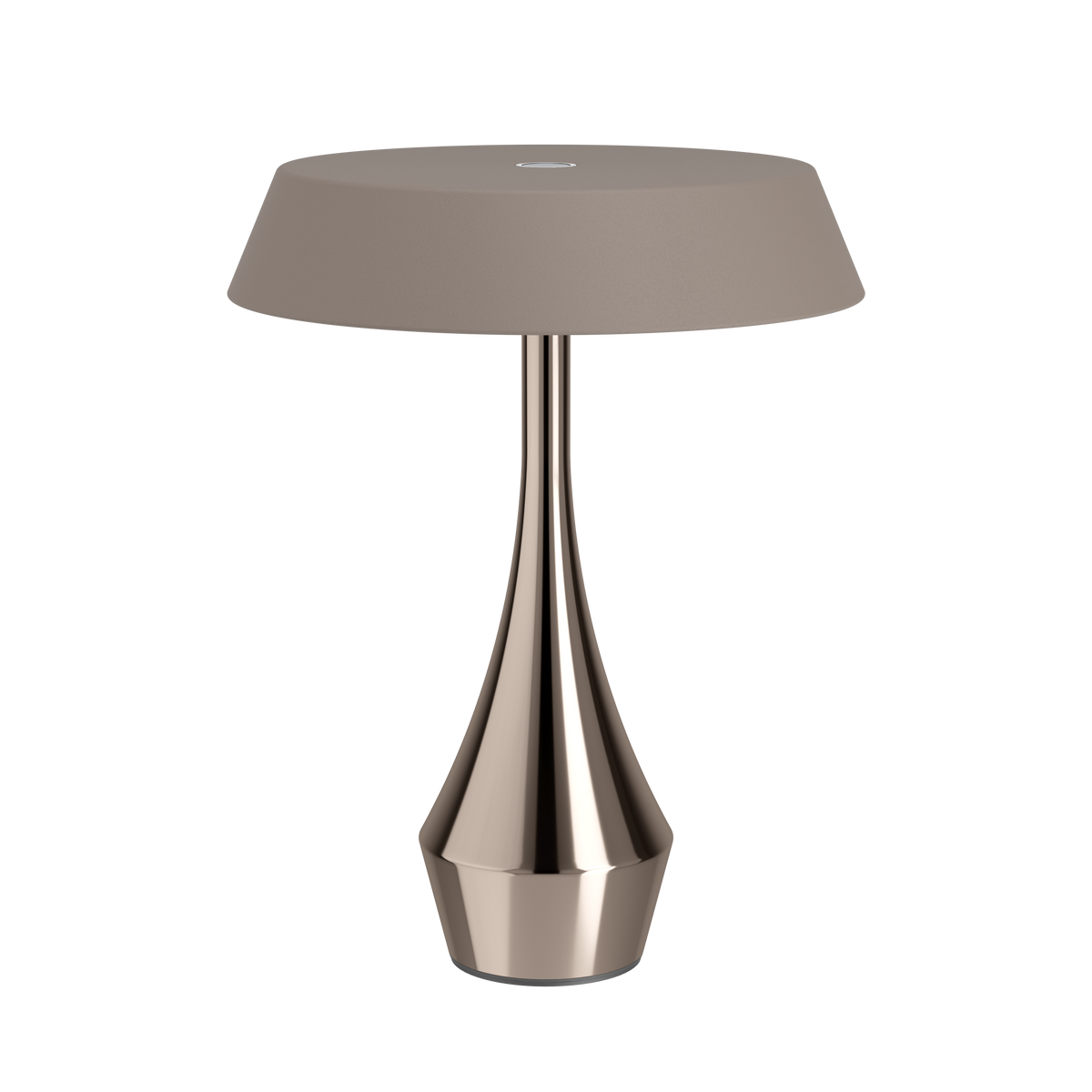
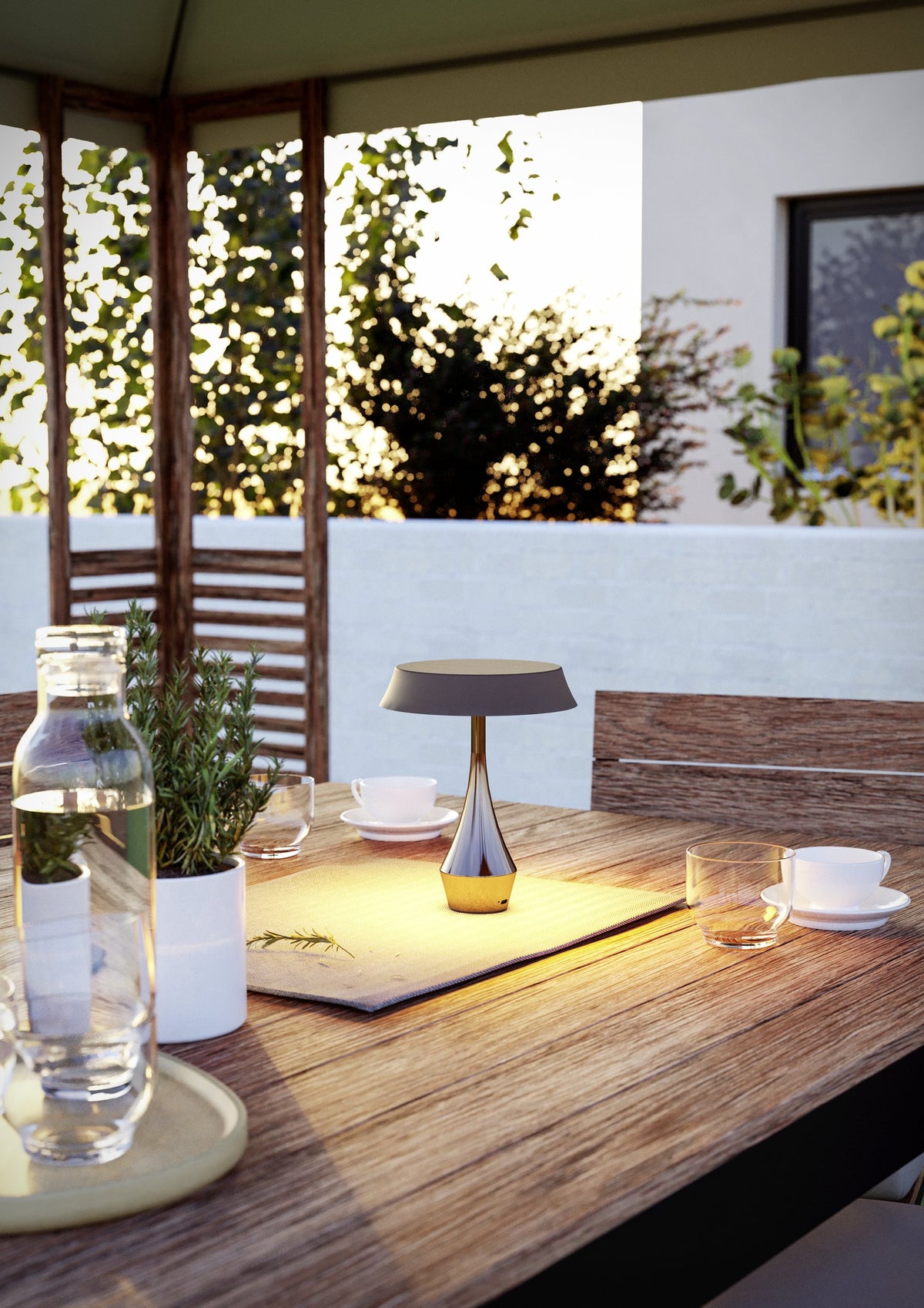
Outdoor floor lamps can add another layer of light around seating and dining areas. Rechargeable models offer greater flexibility because they can be repositioned without a permanent electrical connection.
Outdoor string lights provide decorative points of light around pergolas, railings and seating areas where you want to create a more atmospheric effect.
An effective outdoor lighting scheme therefore doesn't have to rely on a single type of fitting. Combining different lights allows you to create appropriate illumination for entrances, pathways, entertaining areas and decorative features.
Outdoor Lighting for Your Home & Garden
Good outdoor lighting starts with identifying where light is actually required.
Around the front door, entrances, steps and access points should be clearly visible. Along pathways and driveways, well-positioned lighting can help define the route through the space. On patios and balconies, lighting can combine practical visibility with a comfortable atmosphere for relaxing and entertaining.
The way an outdoor light distributes its illumination is also important.
Lights with a wider distribution can illuminate larger areas, while more concentrated beams can highlight specific features or zones. Downward-facing lights can direct illumination towards pathways, walls and entrances while helping to reduce unnecessary direct glare.
You should also consider how the light is powered.
Mains-powered outdoor lights are well suited to permanent lighting positions. Rechargeable outdoor lights provide greater flexibility, while solar garden lights can be useful where a direct electrical connection isn't available.
The brightness and operating time of solar lights can vary depending on factors such as the amount of sunlight received, positioning, season and battery charge.
Choosing Outdoor Lights for Different Areas
The best outdoor light will depend on its intended location and purpose.
Outdoor wall lights are commonly used around entrances, garages, patios and exterior walls. Outdoor ceiling lights can provide overhead illumination beneath canopies, covered terraces, balconies and carports.
Along garden paths and driveways, pathway, pedestal and bollard lights provide illumination closer to ground level.
For larger spaces or more concentrated lighting, an outdoor spotlight may be more appropriate. On patios and balconies, portable outdoor lamps can provide additional illumination exactly where it's needed around seating and dining areas.
Consider both the design and the way the light is distributed. A decorative patio lamp performs a very different role from a powerful driveway spotlight or a low-level garden path light.
Outdoor Wall Lights
Outdoor wall lights are mounted directly onto exterior walls and can be used around front doors, garages, patios and other areas around the outside of your home.
Depending on the design, they may direct light downwards, spread illumination across the surrounding area or create both upward and downward lighting effects.
This makes exterior wall lights suitable for both functional illumination and decorative architectural lighting.
The EGLO range includes LED designs as well as selected outdoor wall lights with motion sensors. When choosing a fitting, consider its installation position, light distribution and IP rating alongside its overall design.
Bollard & Pedestal Lights
Pedestal lights provide lower-level illumination around walls, patio edges, pathways and driveways.
Bollard lights are generally taller, creating more prominent points of illumination and helping to define routes through gardens and other outdoor areas.
Lower designs can create a more discreet appearance, while taller bollards can be useful along longer pathways and driveways where light needs to reach the surrounding surface from a greater height.
Garden Pathway Lights
Pathway lights help define garden paths, entrances and driveways after dark.
Using several lights along a route can create a more consistent pattern of illumination. There isn't one universal spacing measurement for every installation: the appropriate distance between lights depends on the width of the pathway, height of the fittings and their individual light distribution.
Depending on the product range, options can include mains-powered designs, solar pathway lights and models with motion sensors.
Outdoor Spotlights
Outdoor spotlights provide more directional illumination for larger areas or individual features.
A wider beam can be useful for areas such as driveways and courtyards, while a more concentrated beam can highlight trees, plants, walls and architectural details.
Depending on the model, options can include LED outdoor spotlights, motion-sensor spotlights and solar-powered outdoor spotlights.
When comparing models, consider lumen output, beam angle, installation position and the size of the area you want to illuminate.
Outdoor Ceiling Lights
Outdoor ceiling lights are a practical option for covered entrances, patios, balconies and carports.
Because they're installed overhead, they don't require additional wall or floor space and can distribute light directly into the area below.
A compact outdoor ceiling light may provide sufficient illumination for a smaller covered area, while larger patios and carports may benefit from several appropriately positioned light sources for more even coverage.
Outdoor Floor Lamps
Outdoor floor lamps bring additional light to seating areas, garden tables, patios and balconies.
They can complement permanently installed outdoor lighting and help create more defined lighting zones around outdoor living areas.
Rechargeable outdoor floor lamps can be repositioned without permanent installation, making them particularly flexible. Solar-powered models can provide similar freedom of placement but need to be positioned where their solar panel can receive sufficient sunlight for effective charging.
Outdoor String Lights
Outdoor string lights provide decorative points of illumination alongside your main outdoor lighting.
They can be positioned around pergolas, railings, patios and seating areas to create a more atmospheric lighting effect.
Always make sure the string lights are suitable for their intended outdoor location. Consider the overall length, power supply and IP rating when choosing a product.
What to Consider When Buying Outdoor Lights
When choosing outdoor lights, consider where they'll be installed, their IP rating, brightness, colour temperature and power supply.
Key factors include:
IP rating: The appropriate IP rating depends on the installation location and level of exposure to water, moisture and dust. IP44 provides protection against splashing water and may be suitable for certain outdoor locations. More exposed installations may require a higher rating, such as IP54, IP65 or above, depending on the conditions. Always check the individual product specifications and installation requirements.
Brightness: The amount of light required depends on the size and purpose of the area, number of fittings and desired lighting effect. A lower lumen output may be sufficient for decorative patio or garden lighting, while larger functional areas may require greater output. Light distribution, mounting height and positioning will also affect the result.
Colour temperature: Warm white light of around 2,700–3,000 K is a popular choice for patios, balconies and garden seating areas where a comfortable atmosphere is preferred. Around 3,500–4,000 K can provide a clearer, more functional appearance for entrances, pathways and other practical areas. The most suitable colour temperature will ultimately depend on the application and your personal preference.
Power supply: Mains-powered outdoor lights provide a permanent lighting solution. Rechargeable lights offer more flexibility, while solar lights don't require a direct mains connection but depend more heavily on their position, available sunlight and battery charge.
Motion sensors: Outdoor lights with motion sensors can be particularly useful around entrances, garages, driveways and less frequently used pathways. The light switches on automatically when movement is detected. When comparing products, check features such as detection range, detection angle and adjustable illumination time.
Using these criteria will help you choose outdoor lighting that suits the location, provides the required illumination and complements the overall design of your home and garden.
FAQs
Which Outdoor Light Is Best for a Front Entrance?
Outdoor wall lights are a popular choice for front entrances, helping to illuminate the doorway and surrounding area. If the entrance is covered, a suitable outdoor ceiling light may also be an option.
An outdoor light with a motion sensor can be particularly practical if you want the light to switch on automatically when movement is detected. Always check that the light's IP rating and installation requirements are suitable for its intended outdoor location.
What IP Rating Should an Outdoor Light Have?
The appropriate IP rating for an outdoor light depends on where it will be installed and its level of exposure to water, moisture and dust. IP44 provides protection against splashing water and may be suitable for certain sheltered or less exposed outdoor locations.
For areas with greater exposure to dust or water, a higher rating such as IP54, IP65 or above may be required. Always check the individual product specifications and make sure the light is suitable for its intended installation location.
How Many Lumens Should an Outdoor Light Have?
The right lumen output for an outdoor light depends on the size of the area, how it will be used, the light distribution and the number of lights installed.
Decorative or atmospheric garden lighting generally requires less light than functional areas such as pathways, entrances and driveways. When comparing outdoor lights, check the lumen output of each product alongside its beam angle, positioning and intended use to find the most suitable option for your space
Which Colour Temperature Is Best for Gardens and Patios?
Warm white light of around 2,700–3,000 K is a popular choice for patios, balconies and garden seating areas, where it can create a comfortable and inviting atmosphere.
Solar or Mains-Powered Outdoor Lights – Which Is Better?
Solar outdoor lights are a practical choice where there is no convenient mains connection and can offer greater flexibility when positioning lights around the garden. Their performance depends on factors such as sunlight, positioning, charging time and battery charge, so brightness and operating time can vary.
Mains-powered outdoor lights provide a more consistent source of power and are well suited to permanent lighting around entrances, pathways, patios and other regularly used areas.
The best option depends on where the light will be installed, how much illumination you need and whether a suitable mains connection is available.
When Should I Choose an Outdoor Light with a Motion Sensor?
An outdoor light with a motion sensor can be particularly useful around entrances, driveways, garages and less frequently used pathways. The light switches on automatically when movement is detected, providing illumination when and where it's needed.
When choosing a motion-sensor outdoor light, check the detection range, detection angle and adjustable illumination time to make sure they're suitable for the area you want to cover.